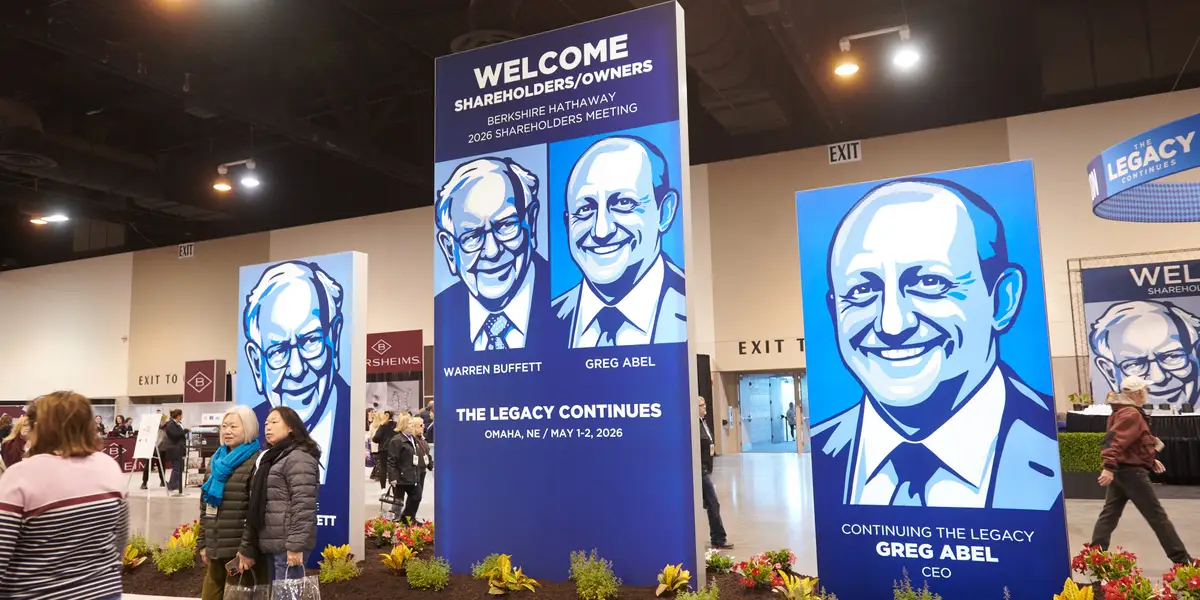
Following in the footsteps of a legend is no easy feat. For every Tim Cook, there are countless tales of new leaders failing to fill gigantic shoes.
Read more These real estate investors built cash-flowing portfolios. Here are the rules they swear by.
New Berkshire Hathaway CEO Greg Abel finds himself in such an unenviable position: He’s tasked with replacing Warren Buffett, the wealthiest self-made investor in history and arguably the greatest market titan of them all.
Since taking over at the start of 2026, Abel has let his portfolio moves do the talking. But on Wednesday, he sat down for a wide-ranging interview with CNBC that shed light on Berkshire’s investment strategy.
The broad takeaway: The firm is embracing the AI boom more directly than its old-school reputation might suggest. But it still wants to do it the Berkshire way, more as a hands-on operator than a tech speculator.
Investors could use a win at this point. Berkshire shares have barely budged this year, lagging the S&P 500 by more than 10 percentage points as the market’s AI-led rally has left its cash-heavy, old-economy portfolio behind.

Betting on the next AI bottleneck
The clearest evidence of Berkshire’s openness to AI is its roughly $38 billion stake in Google parent Alphabet. Abel confirmed on Wednesday that Berkshire started amassing its position last year as a bet on AI, saying the company came on the radar because AI was helping Berkshire’s own operating businesses.
But Abel’s more interesting comments may have been about a less glamorous side of the AI trade: electricity. He made it clear that Berkshire sees access to power as the AI boom’s next bottleneck and is positioning itself to capitalize.
So with many investors still focused on global chip shortages, Berkshire is looking further out and trying to get ahead of the next AI logjam.
That’s where its operator mindset comes into focus. Berkshire isn’t just buying a stake in an AI winner. Through its energy business, it also owns utilities across Iowa, Nevada, and much of the western US that could supply a crucial ingredient of the boom.
Read more Amazon projects it’s on track to deliver nearly 90% of its own US packages
Its Iowa utility already gets roughly 8% of its power load from data centers, and Abel sees opportunity in continuing to supply AI hyperscalers as they race to build more capacity.
The energy caveat
But the opportunity in electricity comes with a big condition. Abel said Berkshire will only serve new data centers if doing so doesn’t drive up power costs for existing customers.
The stance gets at the AI boom’s next great challenge. It’s already clear that demand for computing power is enormous. Now, Berkshire is betting the trade will turn on physical capacity and permission.
Even if utilities can generate enough power for data centers, can hyperscalers win over the customers, regulators, and local communities who may be asked to pay for it?
Berkshire is positioning itself for that opportunity, while warning that backlash could limit how quickly utilities can turn the AI buildout into profits.
A two-speed economy
Abel also offered a sober reminder that the rest of the economy isn’t sprinting alongside the AI trade. Consumers remain strained by inflation and high mortgage rates, he said, while the housing market faces a “bumpy road” with no quick recovery in sight.
Yet Berkshire’s recent purchase of homebuilder Taylor Morrison shows the firm is willing to invest through that downturn. Abel expects the company to be a “very strong asset” in five to 10 years, as Americans keep pursuing homeownership even if many cannot afford it today.
The new Berkshire may be changing the packaging, but the formula looks familiar: look past today’s pain, invest for the long haul, and maintain hands-on control where it can.
Read more Shopify’s COO says her ideal employee is an ‘X-shaped’ person
About the Author