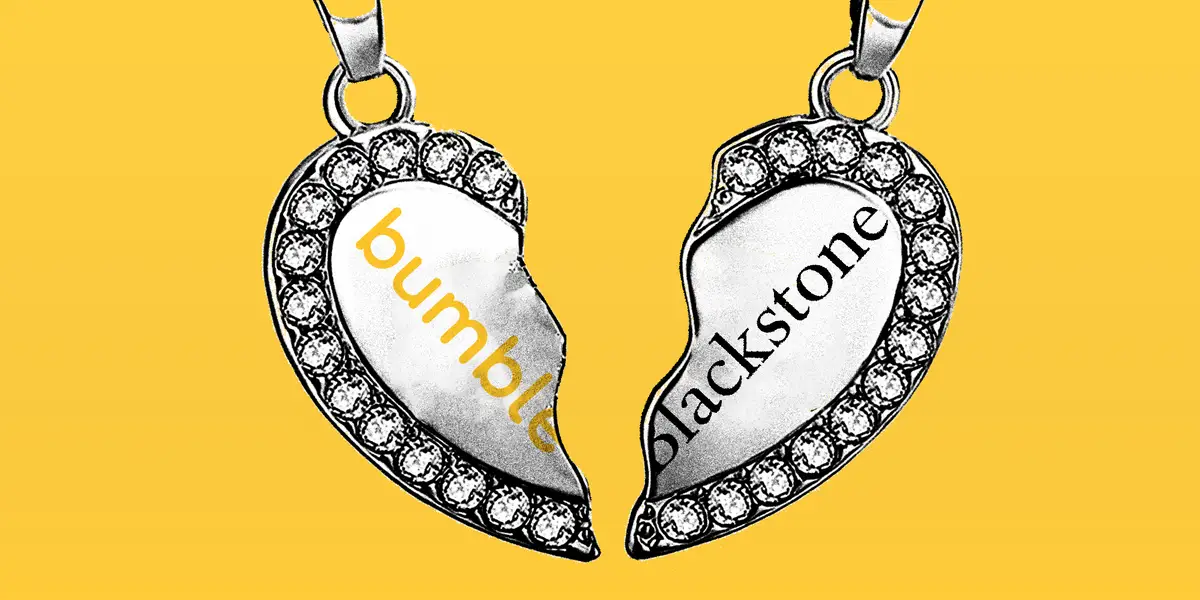
After almost seven years together, it looks like Blackstone and Bumble are splitting, and the private-equity giant is poised to walk away with a tidy return despite the dating app’s massive stock decline.
Read more Will Apple convince people to actually buy a foldable phone?
Blackstone first bought a majority stake in Bumble’s parent MagicLab in 2019 at a $3 billion valuation. Just over a year later, Bumble went public and ended its first trading day worth roughly $13 billion.
The good times didn’t last. The dating app is now worth less than $450 million as shares have fallen more than 96% from their high. Blackstone entered into a deal with UBS late last year that has the firm on track to sell out of its Bumble position in the first half of next year, according to SEC filings.
While investors who bought on IPO day never saw their shares climb to that day’s heights, Blackstone was able to recoup roughly double the $2.1 billion it and venture capital co-investor Accel invested in Bumble in 2019, according to Business Insider’s analysis of SEC filings.
The key to Blackstone’s return was cashing out early. It began taking money off the table before Bumble even traded in the public market, recouping its investment at the IPO, and then making the bulk of its profits through stock sales later that year.
At Bumble’s public-market peak, Blackstone’s investment looked like it could be much more lucrative. Forbes estimated around the IPO that the firm was sitting on a fourfold paper return, though much of those unrealized gains were erased as its stock price dipped.
Blackstone’s Bumble purchase still generated an outsized 98% internal rate of return, or IRR, a private capital industry-favored metric that prioritizes an early return on capital, according to a person familiar with the investment.
Here’s a look back at Blackstone’s Bumble deal as the two companies head toward a breakup.
Looking back on the Bumble-Blackstone business
Within the first two years of the Bumble deal, Blackstone and its investors had already made their money back and then some.
Blackstone used Bumble’s debt to pay itself a $334 million dividend in late 2020, and then, during the IPO a few months later, sold its position down from 83.6% to 53.2%, netting nearly $2 billion.
Later in 2021, while Bumble was valued north of $50 per share, the firm sold another $1 billion in shares. But Bumble’s stock price began to slip, and soon the firm was selling at less than $14 a share by the end of 2023.
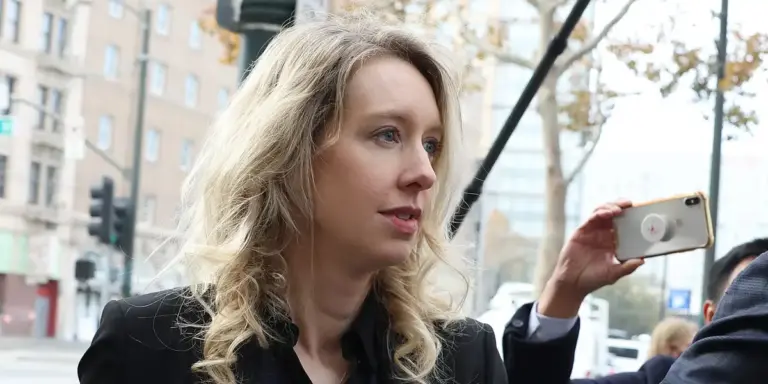
In the meantime, Bumble faced a variety of headwinds. After riding the pandemic tech boom, Match Group’s Hinge began to take over as the dating app du jour of the 2020s. Swiping became passé, and as the 2020s rolled on, dating app fatigue has dominated cultural discourse and sparked renewed interest in meeting people the old-fashioned way (aka out in the real world). In 2024, Wolfe Herd stepped down as CEO, and the company ushered in new leadership. About a year later, Wolfe Herd announced she’d be returning as CEO with a mission: Revamp Bumble’s reputation, help people find love, and embrace AI.
Read more Anthropic posted, then swiftly deleted, a $450,000 sales job aimed at its ‘mega’ customer Meta
Bumble’s price has never recovered, and Blackstone seemed ready to cut its losses by the end of last year.
To get a sense of how much the firm’s value has evaporated, Blackstone’s current 22.4 million shares are worth a little over $60 million. When they sold a similar amount of shares in the second half of 2021, they made $1.084 billion.
How Blackstone backs out
Blackstone’s exit began in earnest at the end of last year, with August 2025’s $104 million sale, offloading over a 10% stake in the company.
Then, in November, Blackstone agreed to a deal with UBS that allows the firm to sell a little less than 5% of the company each quarter.
The firm has maxed out Bumble sales over the last two quarters, and if the trend continues, they’ll be out of the business early next year.
Meanwhile, in another sign it’s moving on, Blackstone’s presence on Bumble’s board has slimmed to zero from the two it was entitled to as recently as June.
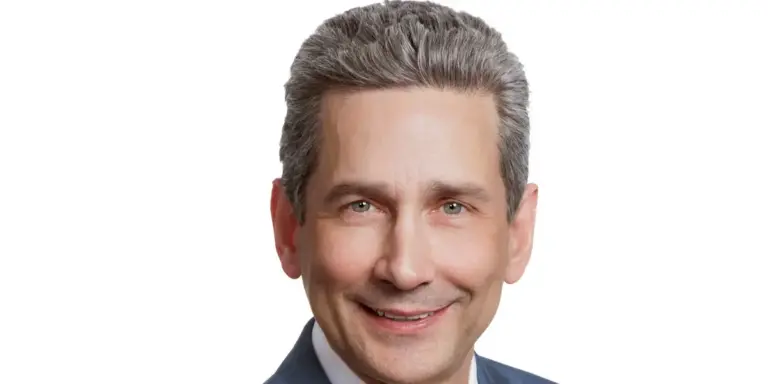
Jonathan Korngold, the former head of Blackstone Growth and lead on the deal, stepped down from Bumble’s board on June 30, around the time he exited Blackstone. Martin Brand also stepped down from Bumble’s board on August 10, though he remains at the firm as the head of Blackstone Capital Partners.
In previous Blackstone exits on the public market, such as with benefits services provider Alight, the firm has exited board seats while still selling off its position.
There’s a possible sale looming in the background of this exit. Reuters reported in June that Bumble was working with Morgan Stanley on a potential sales process. Chandler Willison, a research analyst covering dating apps at M Science, said that the possibility was compelling, given that public companies have a “lot more pressure to improve performance.” He said that a private equity group was the “most obvious” buyer.
While Willison said that he couldn’t speak to Blackstone’s motivations, he could see what they were likely considering: a dropoff in paying users. Bumble reported in its second-quarter earnings that paying users were down 16.4% year over year.
“The longer management says, ‘We’re in a turnaround period,'” he said, “the less confidence not just Blackstone, but investors in general, are going to have with the company.”
Read more The 8 biggest Apple announcements from its launch event
About the Author