Apple’s newest 2026 phones, including the foldable iPhone Ultra, are just around the corner, but you shouldn’t count out last year’s models just yet when considering what might be the best iPhone for you.
Read more Apple raises iPhone prices as memory shortage drives costs up
Whether your decision-making is based on performance, features, display size, or price, our buying guide can help you choose the best iPhone. Collectively, our tech reviewers have tested and reviewed iPhones since the first model was released in 2007, so you can rest assured in our recommendations. Many of our reviewers also use iPhones daily as personal devices, and we can confidently comment on their long-term use and identify shortcomings.
After extensive testing of Apple’s current phones, the iPhone 17 is our top pick as the best iPhone for most people, thanks to its combination of performance, new features, and overall value. If you want the best in battery or camera performance, though, look no further than the iPhone 17 Pro models.
Our top picks for the best iPhone
Best for most people – iPhone 17

The iPhone 17 comes in five colors and features improvements such as an Always-On display, enhanced scratch resistance, an A19 chip, and more. It operates like butter with a shiny new 120Hz refresh rate, but it isn’t a necessary upgrade over recent models.
What we like
What we don’t like
The iPhone 17 is the latest base Apple smartphone, released in September, 2025. Its biggest upgrades include the Always-On display, previously exclusive to Pro models, additional photography features, ProMotion technology, and improved scratch resistance. It also carries over the Camera Control Button and Apple Intelligence from the previous generation.
The brand’s base phone is no longer available in a larger Plus size (it’s been replaced by the iPhone Air), unlike the previous generation; it’s only offered in a 6.3-inch size. It is powered by the A19 chip, delivering smoother, more powerful performance than its predecessors. It also boasts up to 30 hours of battery life with video playback — an eight-hour improvement.
One of the iPhone 17’s shiniest new features is its new camera, now complete with Center Stage and an 18MP front camera for better selfies than ever. The auto-centering capability also applies to video calls, so you don’t need to worry about staying in frame. Additionally, you can take advantage of the new Dual Capture video mode and 48MP Ultra Wide lens. In practice, selfies look better than ever, and the automatic centering helps users stay in the moment, instead of fiddling with camera settings.
Starting at $800, it’s the second-cheapest phone in Apple’s lineup. With its solid feature set, including a display with ProMotion 120Hz technology, it’s a solid choice for its price point. Though it can feel difficult to recommend if you’re upgrading from a 16 because of its cost, if you have the funds and are looking for a new generation, its performance and camera offer a palpable difference that makes it the best contender.
- See our full iPhone 17 review
- Also: Best iPhone 17 cases and best iPhone 17 screen protectors guides
Best of the best – iPhone 17 Pro Max

The newest iPhone Pro Max has a 6.9″ display and includes the A19 Pro chip, upgraded camera systems, and the longest iPhone battery life to date.

The newest iPhone Pro has a 6.3″ display and includes the A19 Pro chip, upgraded camera systems, and the longest iPhone battery life to date. This smaller model is much more comfortable to use one-handed than its Max sibling.
What we like
What we don’t like
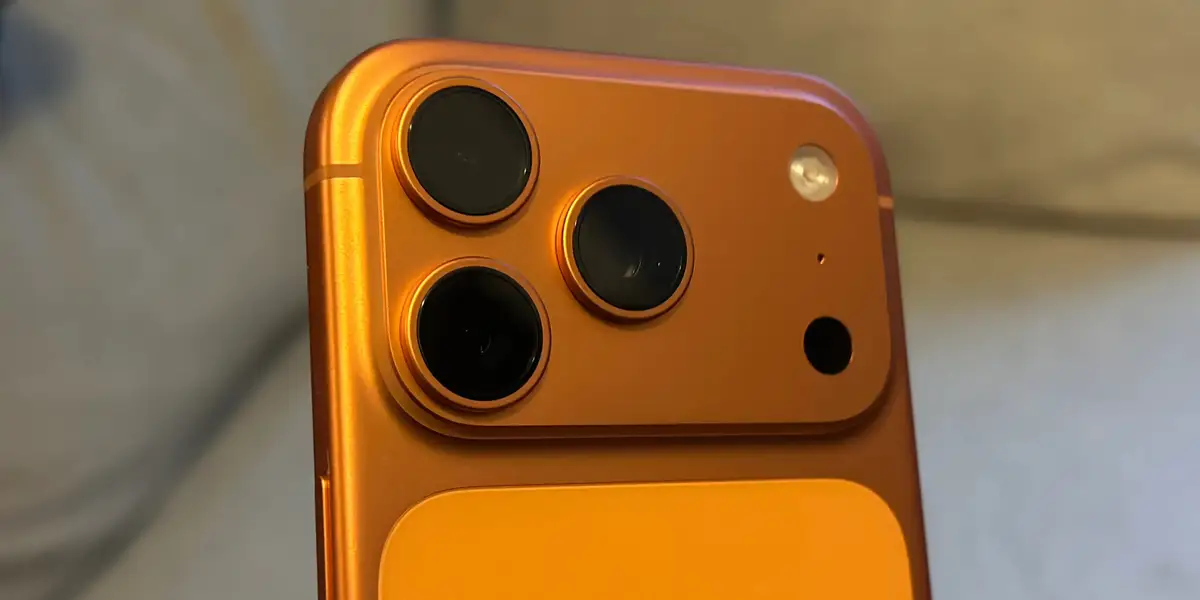
The iPhone 17 Pro and Pro Max are the latest takes of Apple’s suped-up Pro smartphones, initially released in September 2025. Both boast the boldest visual redesign we’ve seen in years on the Pro series, thanks to that massive eye-catching camera bump on the rear of the device – although Apple would much prefer you call it the ‘Plateau’. Unlike the base iPhone, it’s a clear indication that you have purchased the latest and greatest of the iPhones.
The Pros are built for longer battery life (in the case of the 17 Pro Max, the longest battery life among all iPhones released to date) and boast a new A19 Pro chip.
Like the 16 Pro and Pro Max, the phone is available in 6.3-inch and 6.9-inch displays. The larger size also allows the 17 Pro Max to have a slightly bigger battery, reaching up to 39 hours of video playback (per Apple), while the 17 Pro can hit 33 hours. In contrast, only the iPhone 16 Pro Max could reach 33 hours (while the 16 Pro tapped out at 27 hours).
While the change in battery life might make headlines, the flashiest features are the camera system upgrades. The rear cameras are all 48MP, allowing the phone to reach up to 8x zoom. The 18MP Center Stage front camera is also an improvement from the 12MP TrueDepth camera found in the 16s, offering enhancements for both selfies and video calls. The Camera Control button, first introduced in the 16s, is also back in the latest version of the phones. Additionally, the Ceramic Shield front returns with better scratch resistance, and this time, there’s also Ceramic Shield protection on the back.
The Pro starts at $1099, and the Pro Max starts at $1199. For the first time, users can now opt to purchase a Pro Max with up to 2TB of storage (although that will run you nearly $2,000). The phones come in Silver, Cosmic Orange, and Deep Blue.
Battery life and screen size aside, there are no other technical differences between the 17 Pro and the 17 Pro Max, so simply choose whichever size is best for you.
- See our full iPhone 17 Pro review
- Best iPhone 17 Pro cases and best iPhone 17 Pro screen protectors
- Best iPhone 17 Pro Max cases and best iPhone 17 Pro Max screen protectors
Best for style – iPhone Air

Apple’s sleekest and thinnest iPhone yet, the brand-new iPhone Air has a width of less than a quarter-inch. It still packs plenty of functionality, with a 27-hour battery life, Apple Intelligence, and A19 Pro chip.
What we like
What we don’t like
The iPhone Air debuted in September 2025 alongside the iPhone 17 lineup and has, perhaps unfairly, been written off by most. Sales numbers haven’t been that great, with Apple reportedly already cutting production, and it’s unclear whether we’ll get a follow-up at all. We hope this isn’t the last time we see the Air series, though.
The iPhone Air is a beautiful feat of design and truly has to be held in the hand to really appreciate just how thin and light it is. All of this has meant the phone comes with some hefty caveats, which ultimately have made it a hard sell at $1000 – $200 more than the more capable base iPhone 17.
Thin phones mean less space for a battery. In fairness, after having used the phone for months as a daily driver, the battery really isn’t that bad at all for day-to-day use. Sure, if you’re doing a lot of gaming or video streaming, or using the camera a lot, it likely will need charging before you head home. For average use, though, doing a bit of browsing on a commute, a few trailers, and basic pics, I was easily able to make it home without topping up.
What’s ultimately making the iPhone Air harder to recommend at full price is the dumbed-down camera options. The iPhone Air only has a 48-megapixel wide-angle lens on the rear. As for distance, it struggles at both extremes with severely limited zoom options and no macro photography. There are no ultrawide or telephoto lenses – and we’d expect an ultrawide lens at least for the price.
Selfies, or close-ups of pets, are really good, with rich detail, since the base wide-angle lens is still a great camera. However, as soon as you try to zoom in manually, the resolution nosedives fast, even when hitting that measly 2x.
Going back to the phone itself, I must give a special shoutout to the titanium frame, as it does an incredible job of protecting the phone against all manner of bend abuse. I’ve seen some seriously brutal bend tests online and have even given it a fair go myself, with barely any flex from significant pressure.
Targeted impacts could crack the screen or the glass back, of course. Adding a case does diminish the ultra-thin design somewhat, making it more like a regular phone, but it’s still super light. Like almost every phone nowadays, it’s a little slippery anyway, so we’d certainly pick up something from our best iPhone Air Case guide (or an iPhone Air screen protector at the very least) if you’re thinking of taking a chance on Apple’s sleekest iPhone yet.
What about older iPhones?
Picking up an older iPhone is a great way to save some extra cash. All the models we’ve still included below in this roundup of the best iPhones still hold up well today. Especially the iPhone 16.
Apple does a good job of keeping older iPhones supported for years after release, with ongoing iOS updates and security upgrades.
Some smaller phone carriers often seem to be the ones shifting remaining units of models a few years behind, but they might still be new, having never been used before. Or you might be able to buy them outright, for hundreds less than the original MSRP.
The older some phones get, though, the more chance you’re going to be looking at refurbished/renewed models, so we wouldn’t go too far back if you don’t have a phone that’s seen a little bit too much action over the years.

Apple’s older standard flagship phone, the iPhone 16, runs Apple Intelligence and boasts some hardware upgrades over the iPhone 15, like the useful Action and Camera Control buttons and a new-generation processor.
What we like
What we don’t like
The iPhone 16 is still a fine option for most people thanks to its comparable performance, features, and overall value.
The iPhone 16 packs an A18 processor, the Action button, and an improved ultrawide camera. It even includes features we’d expect as Pro model exclusives, like the new Camera Control button, macro photography, ray tracing for games, faster MagSafe charging, and support for Apple’s AI suite, Apple Intelligence.
The Apple Intelligence hasn’t exactly been a big success so far, massively underdelivering on all the promises it made ahead of launch, but it has it’s uses. Among our favorite features are the convenient Writing Tools for generating and improving prose and summaries for emails and notifications. Apple’s official ChatGPT integration also allows you to get better and more accurate answers to your questions when using Siri. Yet, Siri and ChatGPT still feel like two different entities competing for your attention, which somewhat muddies the experience, as it’s often unclear whether Siri or ChatGPT will answer your question unless you ask for ChatGPT specifically.
The iPhone 16 is incredibly powerful thanks to the A18 processor, even beating the iPhone 15 Pro models in benchmark tests. You won’t feel a dramatic difference in day-to-day use if you have a recent iPhone model, but it’ll be noticeable if you own an iPhone 12 or older, which is a testament to the iPhone’s longevity when it comes to running apps and games. Plus, the iPhone 16’s sheer power suggests it’ll last even longer than a typical iPhone release before showing signs of slowing down.
Read more Salesforce has held talks to buy Listen Labs, an AI customer research platform, for $2 billion
In our testing, the Camera Control button has proven to be a useful shortcut for opening the camera app and snapping a quick photo or video recording. It’s especially useful for finely adjusting zoom when holding the iPhone 16 horizontally compared to making imprecise pinch gestures on the display. Otherwise, it’s mostly a different method for selecting and controlling other camera functions, like adjusting exposure and depth and switching Photographic Styles and Tones. It’s somewhat easy to accidentally swipe the Camera Control button, which frustratingly adjusts whatever function it’s set to, but it’s still useful overall if a little tough to reach when holding the phone vertically.
The ultrawide camera is still 12MP, but it captures more light for better quality, especially in low light. It also features autofocus, enabling macro photography for beautiful and detailed up-close shots.
The 60Hz display refresh rate is our biggest complaint with the iPhone 16; thankfully, it was addressed in the newer iPhone 17, which finally received a 120Hz upgrade. Animations and scrolling can appear choppy at 60Hz, delivering a less-than-premium experience.
Read our full iPhone 16 review, and see our guide to the best iPhone 16 cases to protect the phone.

The iPhone 16 Pro models support Apple’s headlining new feature, Apple Intelligence. They also include upgraded cameras, the A18 Pro processor, a new Camera Control button, and improved battery life.
What we like
What we don’t like

The iPhone 16 Pro and iPhone 16 Pro Max are the older Pro models, so the choice depends on your personal size preference and if you need a longer battery life.
Speaking of size, the iPhone 16 Pro introduced a larger 6.3-inch display, and the iPhone 16 Pro Max has a 6.9-inch display. Both Pro models are slightly larger than before as a result, though they don’t seem significantly bigger due to slimmer bezels around the screens. Those thinner borders also give the iPhone 16 Pro a more premium look and feel than the base iPhone 16.
The iPhone 16 Pro models run on the A18 Pro processor, which is even more powerful than the A18 in the base iPhone 16 models. You might not sense a difference in performance today or even a couple of years after launch. However, the A18 Pro will likely run apps and games more quickly and smoothly in four or more years than the standard A18. It’ll surely outperform the iPhone 15 Pro models’ A17 Pro chip for Apple Intelligence over time, especially as the AI suite expands with new and more demanding features. If you tend to keep your iPhones for four or more years, even as a casual user, buying an iPhone 16 Pro at the right price today, still makes sense.
Unlike the iPhone 15 Pro and iPhone 15 Pro Max, which had different zoom cameras (3x and 5x, respectively), the iPhone 16 Pro and iPhone 16 Pro Max have identical camera specs and features.
While the iPhone 16 Pro models are still truly excellent, Apple made it harder for most people to justify buying one over a base iPhone 16 model. All four models in the iPhone 16 lineup include the Action button, Camera Control button, 48MP main cameras, the Dynamic Island, Apple Intelligence support, and super bright displays, so you don’t need to go Pro if those features are all you need.
Still, casual users can enjoy a dedicated 5x zoom camera, a higher-resolution 48MP ultrawide camera, larger screen sizes, and Apple’s ProMotion 120Hz display.
Read our full iPhone 16 Pro and Pro Max review, and see our guides to the best iPhone 16 Pro cases and best iPhone 16 Pro Max cases to protect either phone.
Older iPhones to avoid – even if they’re cheap
We don’t recommend buying the iPhone 12 or any older model. You might find them refurbished at a tempting price, but you won’t be getting your money’s worth, as they won’t last long in terms of performance or iOS updates for new features and security patches.
How we test iPhones
To test iPhones, we use them as if they were our main daily drivers for at least a week, if not longer. That way, we can get an overall sense of their performance, camera quality, battery life, and new features and compare them to our experience with other models within the same generation and previous iPhone generations. We’re able to make definitive judgments in such a short amount of time thanks to our extensive experience testing and reviewing iPhones.
We expect the latest iPhones to run as quickly, smoothly, and flawlessly as any of the best phones. To test performance, we run popular and widely used apps and look for any sign of stuttering or slower-than-expected loading times. We also compare Geekbench and 3DMark benchmark tests to see whether new models have higher (or lower) performance improvements than typical year-over-year results.
To test camera quality, we take photos of the same scenes and subjects with each lens and compare the results for different phones. For greater consistency, we’ve started taking pictures of our typical scenes at the same time and place with all the latest, generationally current phones available in the US.
We also take several, often hundreds, personal photos with iPhones, like those of friends and family. These photos weigh heavily in our assessments, as they reveal positives and negatives that testing scenes don’t, such as the ability to capture clear images of moving subjects and the everyday experience of using the cameras.
For battery life, we put each iPhone through a stress test that simulates a blend of typical casual and intensive daily usage that includes two hours of video streaming at a set brightness, one hour of music streaming while connected to Bluetooth speakers, five runs of the Geekbench 6 CPU benchmark test, and two runs of the 3D Mark Wild Life Stress Test. We then note the remaining battery percentage.
Our battery test is designed to simulate mixed light and heavy usage with three hours of screen-on time. It involves:
- Streaming a YouTube video for two hours.
- Streaming music to a Bluetooth speaker for an hour (with the screen off or always-on display enabled if applicable, without background).
- Two cycles of the intensive 20-minute 3D Mark Wild Life Stress Test.
- Five runs of the Geekbench 6 CPU benchmarking test.
FAQs
Which iPhone has the best camera?
The iPhone 17 Pro models have the best cameras in the current lineup. Although the base iPhone 17’s 48MP camera takes comparable photos, the iPhone 17 Pro and iPhone 16 Pro Max’s 48MP ultrawide and superior zoom features deliver higher quality ultrawide and zoomed photos.
The iPhone 17 Pro’s three cameras are more versatile than the base iPhone 17’s two, but the iPhone 17 is still multifaceted with its macro photography and a 4x optical-quality zoom option. While the Pro models have advanced features for shooting photos and videos, the standard iPhone 17 camera system can capture great image quality that should satisfy most users, especially for social media.
When is the best time to buy a new iPhone?
There is no objective “best time” to buy an iPhone. However, it can be argued that it’s better to buy a new iPhone sooner rather than later after a new iPhone launch, which is usually September each year. If you miss any enticing preorder incentives, though, then hold on a month or so as the major carriers get super competitive for the Black Friday sales, often bundling in other items like free iPads or Apple Watches when you join some of their bigger Unlimited plans.
With the launch of its latest phones, Apple also retained the older, and slightly cheaper iPhone 16 in its lineup, but previous-gen Pros got the chop. You can still find older phones via third-party retailers, though. So you can still buy a worthwhile, new-condition iPhone without paying the price of the latest model.
If you need a new iPhone because your current one is broken or not working, the best time to buy a new iPhone is now.
Where is the best place to buy an iPhone?
Carriers tend to have the highest trade-in values for your old phone. We’ve seen trade-in deals where you can get the latest iPhone for free by trading in an older iPhone.
We’ve also seen carriers trade significantly older iPhones for the same value as a year-old iPhone around the time a new iPhone is released.
However, carrier deals usually come with restricting conditions, like signing up for expensive higher-tier plans and keeping the phone for three years before upgrading. If you value the flexibility of picking your own plan, changing plans or carriers, or upgrading to a new iPhone whenever you want, you’re better off buying a phone outright from the company or a retailer like Amazon or Best Buy.
Some carriers offer programs that let you pay the full price of a new phone in monthly installments, but you’ll be locked into the carrier until you pay it off.
Do iPhones need cases?
A naked iPhone undoubtedly looks and feels the best, but one drop from a decent height onto a hard floor can crack any iPhone’s back or front glass, so we recommend that iPhone owners use both cases and screen protectors.
Some people accept the risk of damage, and some buy AppleCare Plus for this very reason, which offers unlimited repairs for accidental damage with a $29 fee per incident for back or front glass damage on top of the cost of AppleCare Plus.
However, a case and screen protector combination is the best and most cost-effective way to ensure your iPhone’s hardware stays in working order.
Read more The foldable iPhone Duo is Apple’s boldest smartphone experiment yet
About the Author