Over the course of six months, I tested several top fitness trackers head-to-head to determine which brands, models, and categories are actually worth it. And in a sea of bulky watches, complicated app interfaces, and buzzing notifications, the Fitbit Inspire 3 stood out as a wonderfully uncomplicated and affordable option. It does an excellent job of focusing on the essentials to help you be your healthiest self.
After weeks of testing during work, sleep, workouts, and travel, I’ve found the Fitbit Inspire 3 nails the fundamentals without any of the fuss. It’s light, low-profile, and comfortable to wear. It tells you if you’re moving enough, getting your heart rate up enough, and sleeping well, all with reliable accuracy. I ultimately named it the top budget option in my guide to the best Fitbits.
For $100, there are definitely some trade-offs worth knowing before you buy. But if you’re looking to improve daily habits for a healthier lifestyle, this is an ideal entry-level fitness tracker.

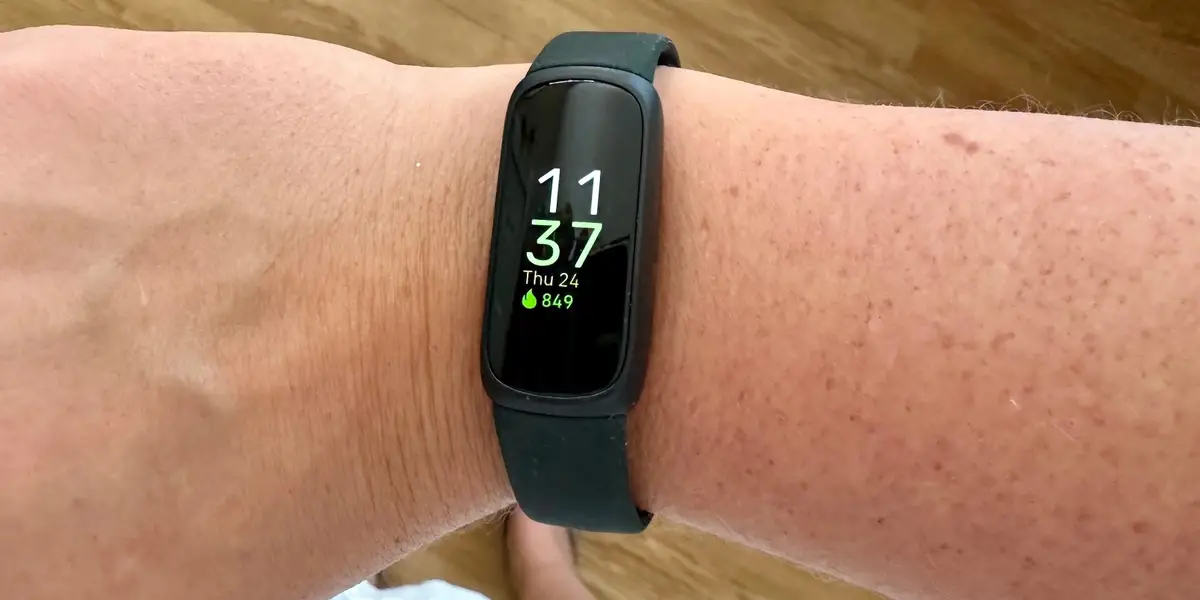
The Inspire 3 may be one of Fitbit’s most basic watches, but it still packs a powerful fitness-tracking punch with tons of trackable activities, health features like skin temperature sensing, and a comfortable, lightweight design.
What we like
What we don’t like
What I like most
It’s light, low profile, and comfortable
The first thing I noticed after two minutes of wearing the Inspire 3 — let alone two weeks — is how unobtrusive it is. After wearing more traditional-sized Garmins, Fitbits, and other fitness trackers, the bangle-sized Inspire 3 was truly a breath of fresh air. It’s by far the most comfortable traditional fitness tracker I’ve tested. Though it’s not quite as discreet as screenless trackers, like the Fitbit Air, its sheer size and minimal weight let it vanish on the wrist. Whether typing away on a computer, working up a sweat on morning walks, pulling on long sleeves for dinner, or sleeping, the tracker’s lightweight and compact size made it fade into the background of my day.
It auto-tracks activity like a pro
Across the three different Fitbits I tested side by side, the Inspire 3 was the most consistent at detecting both long and short walks and bike rides. While all the devices are supposed to auto-detect most types of activity (walking, running, outdoor biking, elliptical, rowing, spinning, and other aerobic workouts) after 15 continuous minutes, I found that the Charge 6 and Versa 4 were way more likely to miss quick outings, just lumping them into step totals or calories burned rather than recording them as a marked moment of movement in your day.
I appreciated that the Inspire 3 flagged the small bursts of activity as true movement, so that when I looked back at my day, I could see that I hadn’t just hit my steps but had actually moved my body regularly enough to be proud of.
It monitors your sleep — and wakes you with blissful care
Thanks to the small size and silky silicone band, this tracker is very comfortable to wear while you sleep. Because the button is flush with your wrist, it also doesn’t have the issue of the green sensor lights blinding you when you roll over in the night, as some other watches do.
Fitbit offers all the standard sleep tracking found on most wearables these days: the free Google Health app will show basic sleep data like time asleep, sleep quality, sleep stages, and a sleep score. A Premium membership will provide more details about your data, including personalized sleep summaries and a full library of guided programs and mindfulness sessions.
One feature I really appreciate about the Inspire 3 is the gentle alarms. You can set a daily alarm on the watch itself to wake you up with a soft buzz and vibration; I found this to be nicely quiet (bonus if you get up at a different time than your partner, as I do), but also just strong enough to wake me without a jolt to the nervous system. You can dismiss or snooze the alarm right on your wrist. The Inspire 3 also features a Smart Wake function that utilizes Fitbit’s sleep-tracking capabilities to wake you up when your sleep is at its lightest within a 30-minute window you set.
The screen is small — but clean and legible
Yes, the screen is small (that’s the cost for the major pro of being unobtrusive). But Fitbit has done a solid job at optimizing what you see. During a workout, it fills the entire screen with a single key metric (e.g., heart rate, pace, time elapsed), and you can swipe through to view another metric. It’s not ideal for people who are, say, training for a race and will want a multi-metric dashboard at a glance. However, for anyone who just wants to ensure they’re staying above a certain heart rate threshold during their daily walk or to know how much time has elapsed during their tennis match, it’s plenty functional.
In daily use, I found the menus intuitive, and navigating notifications or the small display didn’t feel too frustrating in short bursts. The trade-off is acceptable at this price point as well.
It has a big battery life for a small device
Fitbit claims up to 10 days of battery life, and my tests showed that to be pretty accurate — even with frequent workouts, auto-detection on, and notifications coming in, I didn’t have to charge the device for well over a week. This felt refreshing compared to many short-lived fitness trackers on the market.
It simplifies moving enough and often
Fitbit’s Reminder to Move was a standout feature during testing. This function vibrates your device and prompts you to get up and walk around if you haven’t taken at least 250 steps in the past hour. Almost every wearable comes with a version of this, but I think Fitbit’s take on it — with messages like “Only 58 more to go in this hour!” — is a nice reminder that it’s not just about getting all your steps, but about getting up and stretching your legs regularly throughout the day.
Read more We asked AI how it could kill humanity. Here’s what it told us.
Additionally, Fitbit tracks Active Zone Minutes, or any time your heart rate is at Zone 2 or above — where you start to burn fat or score cardio conditioning. While many watches will give you a summary at the end of the day of how much time you’ve spent in a color-coded heart zone chart, the Active Zone Minutes streamlines this information into, essentially, just a gold star that your heart rate spiked enough to have an impact on cardio fitness and burning fat.
Where it falls short
The small display can be frustrating for notifications
Because of the narrow screen, you won’t be able to easily read any texts or emails beyond the sender and the first few words. You can scroll and read the whole thing, but the display’s size and shape make it very difficult to read more than a few words at a time. If you want to be able to read your incoming email at a glance in the middle of a meeting, this watch isn’t going to cut it.
That said, many people just want to know whether the latest message on their wrist is from someone they need to respond to immediately or an unimportant notification they can take care of later. The screen is just useful enough to convey the basic info of who just texted or who’s calling.
Heart rate is a bit laggy for high-intensity workouts
Overall, the heart rate sensor on all Fitbits is accurate and reliable enough for most people and workouts. The one exception is during high-intensity workouts. During rapid interval changes, I noticed occasional lag in heart rate reading updates. That’s not surprising for optical sensors at this price point, but worth knowing ahead of purchase.
Colors are limited
Because smartwatches and fitness trackers are meant to be worn 24/7, it’s important that the color and aesthetic match your style. While the minimal size is great for blending into (or underneath) any outfit, it only comes in three color options — two of which are bright — which may not work for everyone. You can change out the band, however. (Check out our guide to the best Inspire 3 bands.)
Software and features are limited
At this price point, you’re giving up a lot of the nice-to-have features of bigger and more expensive fitness trackers. There’s no onboard GPS, so if you go for a walk without your phone, you won’t get accurate distance or route information. You won’t be able to control phone apps on your wrist, control music, take phone calls, or make NFC payments. Some of these omissions are understandable at this price tier, but be aware that it’s quite barebones for a wearable device these days.
Will there be a Fitbit Inspire 4?
Google hasn’t announced a Fitbit Inspire 4 yet, but it’s likely the brand will continue releasing new models in the series. The Fitbit Inspire 3 was released in 2022; the Inspire 2 in 2020; and the original Inspire in 2019. Given those release patterns, we’re overdue for a next-generation model.
The longer wait for an Inspire 3 may be related to Google’s decision to release a different kind of budget-friendly Fitbit in 2026: the Fitbit Air. Unlike other Fitbits, the Air is a screenless tracker built for more casual users. Check out our Fitbit Air review for full details.
The bottom line
The Fitbit Inspire 3 is the best fitness tracker for budget-conscious shoppers who want to start a health journey or stay a little more active.
However, at $100, you are giving up certain features. For example, you’re not going to be able to control your phone from your wrist or respond to — heck, even easily read — incoming texts. But what you can do is confirm you’re getting enough steps a day, ensure your walks hit a target heart rate zone for fat burn, and identify where your sleep quality may be falling short.
The Inspire 3 is incredibly lightweight and comfortable, refreshingly uncomplicated, and delivers the core metrics that set the foundation of your health — steps, heart rate, regular movement, and sleep — all without bombarding you with too much data or requiring you to learn a whole new tech ecosystem.
If you’re looking for a little help simply moving a bit more, sleeping a bit better, and feeling a bit healthier — and don’t want to break the bank to do so — the Fitbit Inspire 3 is exactly the fitness wearable you need.
Read more YouTuber Markiplier will get $15 million from GoPro’s merger, but says he’s disappointed in the deal
About the Author