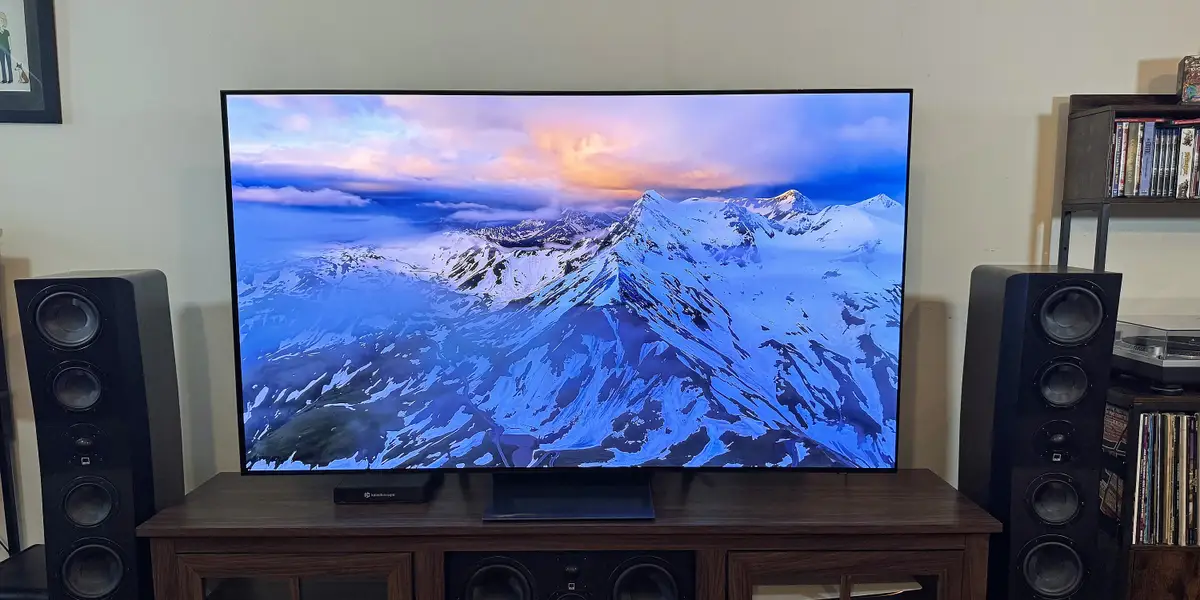
Shopping for a new TV can get overwhelming fast. Between endless spec sheets and flashy jargon, it’s tough to know which models are actually worth your money. That’s where I come in. I’ve been testing home entertainment gear for over a decade and have reviewed TVs across every display type. I know exactly what a TV at every price point should deliver to make it worthwhile, and I’ve used that expertise to highlight the four best TVs you can buy right now.
Read more OpenAI researcher says early-career tech workers should treat jobs as test drives
For most people, the Samsung S90F hits the ideal sweet spot. Its OLED panel delivers high contrast, rich colors, and deep black levels that disappear in a dark room. But if you’re trying to spend less, the TCL QM6K is a standout for the money. It doesn’t match OLED performance, but it punches well above its price, and with a 144Hz refresh rate, it’s a great choice for budget gaming.
All of the models below are available in multiple sizes, including big-screen options perfect for movie nights or sports events like the World Cup. Be sure to select the size you want from each retailer’s listing.
Our top picks for the best TVs
Best overall: Samsung S90F 4K TV – See at Amazon
Best picture quality: LG G5 4K TV – See at Amazon
Best budget model: TCL QM6K 4K TV – See at Amazon
Best midrange option: TCL QM7K 4K TV – See at Amazon
Best overall: Samsung S90F

What we love: It delivers the best balance between image quality and price of any TV we’ve tested.
Drawbacks: Samsung’s smart TV interface isn’t our favorite, and color performance varies depending on the size you buy.
The Samsung S90F offers image quality that outshines most rivals in its price range. It also sports a full suite of smart features and a sleek design.
The TV’s QD-OLED panel delivers pixel-level contrast and dazzling highlights that pop off the screen. Colors are brighter and more vibrant than those on midrange LG OLEDs. Black levels are also deep and inky when watching TV in a dark room.
While testing the S90F, our reviewer measured a peak brightness of about 1,460 nits, which is impressive for an OLED. This allows the S90F to reproduce HDR highlights — like explosions and sun flares — with realistic impact. The result is bold, cinematic picture quality with rich color and sharp detail. You can learn more about the benefits of HDR in our HDR TV guide.
Viewing angles are another strong suit. While LED and QLED TVs can fade when viewed off-center, the S90F maintains contrast and color accuracy from nearly any seat in the room. Gamers will also appreciate the TV’s 144Hz refresh rate on PC and 120Hz support on PS5 and Xbox Series X, ensuring smooth gameplay.
Samsung’s Tizen smart TV interface includes built-in access to the Xbox Cloud Gaming app, allowing Game Pass members to stream Xbox titles without a console. The platform also supports nearly every major streaming service. Navigation speed has also been improved over past Samsung TV models, with faster load times and less lag. That said, our reviewer found the interface’s menu and app organization a bit clumsy.
The S90F is available in sizes from 42 to 83 inches, but only the 55-, 65-, and 77-inch models use Samsung’s QD-OLED panel. Smaller and larger versions still deliver great image quality, but they use standard WOLED panels, so their color range isn’t as wide.
A 2026 version of this TV, called the S90H, is also available. However, it costs a lot more than the S90F and, based on initial testing, doesn’t offer a big upgrade in image quality. That said, the S90H does use a glare-free screen coating to dramatically reduce reflections at the cost of contrast in bright rooms. If glare is a pain point in your space, the S90H could be worth the extra money. But otherwise, the S90F is the better value. You can learn more in my breakdown of 2026 Samsung OLED TVs.
Read our Samsung S90F 4K TV review.
Best picture quality: LG G5

What we love: It delivers an exceptional combination of high contrast and brightness, and its flush design looks stunning hanging on a wall.
Drawbacks: It’s expensive and doesn’t come with a pedestal stand.
The LG G5 is one of the most impressive high-end TVs I’ve tested. It offers a brighter image than most OLEDs while maintaining pixel-perfect contrast.
Using an industry-standard 10% test pattern, I measured a peak brightness of about 2,400. That’s around 1,000 nits brighter than many midrange models, such as the Samsung S90F.
Of course, what’s actually important is how the TV looks when watching real-world content. And in a word, the G5 is stunning. High-brightness HDR movies, such as “Mad Max: Fury Road” and “Aquaman,” leap from the screen in ways I’ve rarely seen on an OLED, fully utilizing the G5’s nearly unmatched combination of intense peak highlights and infinite contrast.
Viewing angles are also wide, allowing you to sit to the side of the screen without any significant shifts in contrast and color. Gamers even get a high 165Hz refresh rate when paired with a PC.
But while incredible on many fronts, the G5 isn’t quite perfect — no display is. The TV initially had issues with banding/posterization (blocky rather than smooth colors), but LG released a firmware update to fix it. Those highly sensitive to spotting posterization may still see some banding here and there, but the G5’s overall image quality is hard to beat.
The G5’s webOS smart TV interface works well enough, but it isn’t my favorite platform. The homepage is a bit barebones in design and features shopping recommendations too prominently. However, you still get access to all the best streaming services, and general navigation and usability are solid. I did run into some errors with hands-free voice search, but it works better when using the remote.
The TV boasts a handsome design, sturdy materials, and a slim profile. It comes with a flush wall mount that allows you to hang the panel with virtually no gap. But the trade-off is that the G5 doesn’t include a traditional stand. If wall mounting isn’t doable in your room, you’ll have to purchase a separate stand.
It’s also worth noting that a 2026 version of this TV, called the G6, is now available. I got an early look at the new model, and it offers improved processing to further minimize banding and a stronger anti-reflective coating. However, the G6 costs a lot more. Dedicated enthusiasts might want to consider the latest model, but most are better off snagging the G5 while it’s available for less. You can learn more in my roundup of 2026 LG OLED TVs.
Read our LG G5 4K TV review and our guide to the best TVs for picture quality.
Best budget model: TCL QM6K

What we love: It’s affordable without sacrificing key picture-quality features, and it’s available in many sizes.
Drawbacks: Its image quality degrades from an angle, and it’s dimmer than pricier TVs.
The QM6K is TCL’s top entry-level QLED TV. The 65-inch size is often on sale for $650 or less, which is an excellent value for a TV in this class.
What sets the QM6K apart from other similarly priced TVs is its use of a Mini LED backlight and quantum dots. These features are typically reserved for pricier sets and enable the QM6K to produce higher contrast and better color than most rivals.
I was impressed by the TV’s backlight control, which produced minimal blooming (halos around bright objects). It also delivered a solid HDR image with excellent saturation. However, as a budget-friendly TV, the QM6K has some limitations. The display’s black levels are slightly lighter than those of pricier QLEDs, and its brightness is more limited.
I measured a peak of 557 nits on a 10% HDR test pattern and about 736 nits on a larger 50% test pattern. Those are decent numbers for an entry-level Mini LED, but the QM6K is notably dimmer than my other picks. As a result, bright highlights in some movies and TV shows have less impact than intended. And although viewing angles have been improved over older TCL QLEDs, they’re still much narrower than those of an OLED TV.
On the plus side, the QM6K offers a significant gaming upgrade over its predecessor, with a refresh rate of up to 144Hz. This makes the QM6K one of the most affordable TVs that can display 4K/120Hz signals from a PS5 or Xbox Series X, enabling smoother motion when playing certain games.
The QM6K’s Google TV interface is easy to use and snappy to navigate, with only small hiccups. When reviewing older TCL TVs, I encountered several minor glitches here and there, but the QM6K was free from bugs.
All things considered, the QM6K is the perfect starter TV for anyone who wants a budget set that still offers worthwhile HDR performance.
Read our TCL QM6K 4K TV review and our guide to the best budget TVs.
Best midrange option: TCL QM7K

What we love: It delivers color and brightness that rivals pricier TVs from other brands.
Drawbacks: Its picture quality degrades when you’re at an angle, and its large pedestal stand could make placing a soundbar tricky.
TCL’s QM7K is one of the best TVs in its price range. It’s an especially great midrange set for those who want an extra-large screen, since its 75-, 85-, and 98-inch sizes are often on sale for excellent prices.
Similar to the more affordable QM6K, the QM7K utilizes a Mini LED backlight with quantum dots and local dimming. It also supports a refresh rate of up to 144Hz and runs Google TV for quick access to numerous streaming services. But what sets this pricier model apart from its cheaper sibling is its peak brightness.
The QM7K can get more than twice as bright as the QM6K. I measured a peak of around 1,800 nits on a 10% test pattern. That’s more than enough to give specular highlights (like explosions) ample intensity in HDR movies and TV shows.
The TV’s backlight control is also impressive. I didn’t notice any major brightness fluctuations or patchy contrast in dark scenes. Likewise, halos around bright objects were almost nonexistent. Similarly, viewing angles have been improved over older models. This is still a QLED, so color and contrast do wash out at extreme angles, but you can veer farther from the center without the TV’s quality degrading as much.
However, black levels aren’t quite as deep as I’ve seen on pricier QLEDs, and the QM7K’s backlight still can’t match the pixel-level precision of an OLED. But given its cost, the QM7K is an excellent midrange TV. The 65-inch model is often available for $1,000 or less, making it an ideal choice for those seeking a bright QLED TV at a reasonable price.
The best TVs compared
Here’s a rundown of key specifications for each of our top TV picks, offering an overview of how they compare.
| Samsung S90F | LG G5 | TCL QM6K | TCL QM7K | |
| Best for | An ideal balance between price and performance | Those willing to splurge on top-notch image quality | Shoppers on a budget who still want solid features | A bright image at a midrange price, especially in larger sizes |
| Skip this if | You want a screen larger than 77 inches or have a room with lots of ambient light | Picture performance isn’t your biggest priority | You need high brightness and wide viewing angles | You often sit off to the side of your screen |
| Typical price (65 inch) | $1,400 | $2,200 | $530 | $900 |
| Panel type | QD-OLED | OLED | QLED | QLED |
| Backlight | N/A | N/A | Mini LED with local dimming | Mini LED with local dimming |
| HDR support | HDR10, HDR10+, HLG | HDR10, Dolby Vision, HLG | HDR10, HDR10+, Dolby Vision, HLG | HDR10, HDR10+, Dolby Vision, HLG |
| Peak brightness | 1,460 nits | 2,400 nits | 560 nits | 1,800 nits |
| Smart TV OS | Tizen | webOS | Google TV | Google TV |
| HDMI | Four HDMI 2.1 | Four HDMI 2.1 | Two HDMI 2.1, two HDMI 2.0 | Two HDMI 2.1, two HDMI 2.0 |
| Refresh rate | Up to 144Hz | Up to 165Hz | Up to 144Hz | Up to 144Hz |
Why do we still recommend 2025 TV models?
For most shoppers, 2025 TVs are still the best value. They’re often available at significant discounts compared with newer 2026 models, while delivering very similar picture quality and features. The latest TVs do offer some improvements, but not usually enough to justify paying hundreds more right now. We expect 2025 models to remain in stock through much of the year, but we’ll update our recommendations as prices on 2026 TVs come down and older models become harder to find.
Other TVs we reviewed
Though they didn’t quite make the cut for this guide, my team and I reviewed several other display models as we sought the best TVs. Here’s a rundown of some other notable TVs we tested, along with details on why they didn’t make our top four picks.
Samsung R95H Micro RGB 4K TV – See at Samsung
Samsung’s R95H is the company’s flagship Micro RGB TV for 2026. Unlike typical QLED and Mini LED sets, which use only white or blue backlights with color filters, the R95H uses an RGB backlight with red, green, and blue LEDs. This allows the backlight to produce color, which enhances performance. We measured 91% of the BT.2020 color space, the widest range we’ve seen on a consumer TV. However, the R95H’s brightness is a bit disappointing for a flagship set, and its contrast still can’t match Samsung’s OLEDs.
Read more Sam Altman is quietly backing a stealth startup that’s building software for robots and cars
Read our Samsung R95H review.
TCL X11L SQD 4K TV – See at Amazon
The X11L is TCL’s first SQD TV, which stands for Super Quantum Dot. In essence, this is an advanced QLED set with better color and brightness than a typical QLED. In fact, this TV delivers the best brightness performance I’ve ever measured. It also has exceptional black-level control for a QLED. That said, it still can’t match the pixel-level contrast of an OLED, and its viewing angles are narrower. It’s also expensive and only available in large 75-, 85-, and 98-inch sizes. If you’re a home theater enthusiast with the funds, this TV is hard to beat, but other models offer a better overall value.
Read our TCL X11L review.
LG C6H OLED 4K TV – See at Amazon
LG’s C6H is a new submodel in its popular C Series of OLED TVs. It’s only available in 77- and 83-inch sizes, while the standard C6 is available in smaller sizes. The C6H is notably brighter than the C6 as it uses the same advanced tandem OLED technology as LG’s more expensive G Series. We were impressed by its image quality, and it has the potential to be the top big-screen OLED value of 2026. However, its launch price is a bit high, so we recommend waiting for sales to see if it drops.
Read our LG C6H review.
Samsung S95F OLED 4K TV – See at Amazon
The S95F is another excellent high-end TV alternative to the G5. It can’t quite reach the same high brightness level, but it can offer slightly richer colors in certain content. However, the S95F uses a divisive matte screen rather than a glossy screen. The matte panel does a fantastic job of reducing reflections, but it can reduce contrast in a bright room. Samsung also sells a 2026 model, the S95H, that can get brighter than the G5 and features a unique metal bezel. But it costs a lot more, and we still prefer the G5’s inkier black levels.
Read our Samsung S95F review and Samsung S95H review.
TCL QM8K QLED 4K TV – See at Amazon
TCL’s QM8K is one of the brand’s top QLED models. It delivers excellent performance that’s on par with many high-end sets from pricier brands. In particular, the QM8K boasts impressive brightness and superior contrast control compared to similar QLEDs. However, overall image quality is still surpassed by OLED models, such as the Samsung S90F. That said, if you’re looking for a high-performance QLED TV for a bright room, the QM8K is an excellent choice. TCL also sells a new 2026 QM8 model, called the QM8L. It costs more but delivers even better color performance.
Read our TCL QM8K review and TCL QM8L review.
Hisense U8QG QLED 4K TV – See at Amazon
The Hisense U8QG is another excellent QLED TV for those seeking a high-brightness screen. It performs similarly to the TCL QM8K, but can get slightly brighter and features a faster 165Hz refresh rate. That said, it’s limited to three HDMI ports and suffers from oversaturated reds. Ultimately, we still give an edge to similarly priced OLED displays for overall performance.
Read our Hisense U8QG review.
Samsung Frame Pro 4K TV – See at Amazon
The Frame Pro is Samsung’s premium version of its popular Frame TV. Like the standard Frame, the Frame Pro is designed to look like a hanging piece of art when not in use as a TV. It accomplishes this with a matte screen that mimics the look of canvas, a flush wall-mount, interchangeable bezels, and access to a vast collection of art to display on-screen (subscription required). This high-end model can get brighter than the standard Frame, and its black-level control is better thanks to edge-lit local dimming. It also utilizes a wireless connection box, which expands your placement options within the room. However, while this is an excellent option for design-focused buyers, its overall picture quality still lags behind that of the best TVs in this guide.
Read our Samsung Frame Pro 4K TV review.
Amazon Ember Omni Mini LED TV – See at Amazon
The Omni Mini LED is Amazon’s flagship TV. This model uses a Mini LED backlight to deliver higher contrast and brightness than the brand’s more affordable offerings. It stacks up well against other TVs in its class, like the QM7K, but its list price is a bit high, and we prefer other smart TV systems over Amazon’s Fire TV interface.
Read our Amazon Fire TV Omni Mini LED review.
Amazon Ember Omni QLED TV – See at Amazon
The Omni QLED is a lower midrange Amazon model that uses regular LEDs but still features local dimming. However, its brightness and color performance are underwhelming considering its price. Our reviewer also noted that most of the TV’s picture modes are wildly inaccurate. For those reasons, we recommend buyers go with similarly priced alternatives from TCL and Hisense.
Read our Amazon Fire TV Omni QLED review.
What TVs are we testing now?
My team and I are constantly reviewing new TV models for consideration in this guide. Here’s a rundown of what we’re testing right now:
- Sony Bravia 9 II True RGB TV – See at Sony
- Sony Bravia 7 II True RGB TV – See at Sony
- Hisense UR9 RGB Mini LED TV – See at Best Buy
- Samsung S90H OLED TV – See at Amazon
How we test TVs
To pick the best TVs, my team and I focus on picture quality, smart features, design, and overall value.
Picture quality: My TV testing mixes objective measurements with everyday viewing. Meters and pattern generators are used to measure a TV’s brightness and color capabilities using Portrait Displays Calman software. But while test patterns are helpful, they don’t tell the whole story. So I also live with each TV for a few weeks, watching movies and shows in both bright and dark environments, just like I would on my own set. This helps me spot performance quirks across different types of content. I also weigh image quality against price, as what I expect from a budget TV differs from what I expect from a flagship model.
Smart features: I spend time with each TV’s smart platform to see how fast it is, how well voice search works, how many apps are available, and how intrusive the ads feel. If a TV includes unique features, I dig into those too to see whether they actually make a difference.
Design: I don’t hold inexpensive TVs to the same standard as premium ones, but I do call out any major design issues. High-end models, on the other hand, should feel premium, with thin panels, metal finishes, sturdy stands, and thoughtful touches like adjustable heights or backlit remotes.
Value: Ultimately, the best TVs strike the right balance between performance and price. Expensive sets need to earn their premium with truly top-tier picture quality, while midrange and budget options should deliver features that go above and beyond what you typically get at their price.
For more details on our review process, check out our breakdown of how we test tech products.
Meet the expert behind this guide:
Steven Cohen, senior tech editor: I’ve been testing home entertainment gear for more than a decade, and my team and I spend all year getting hands-on with the newest TVs. I also studied film production, so I care a lot about how accurately a TV reproduces a director’s intended picture. I use calibration tools, pattern generators, and benchmark discs to measure brightness and color accuracy, but numbers alone only tell part of the story. I also live with every TV I review — watching movies, streaming shows, gaming, and casually channel surfing — to see how it performs in the real world. My goal is to cut through the marketing fluff and help you find a TV that looks fantastic without spending more than you need to.
Learn more about the Reviews team at Business Insider.
TV FAQs
What kinds of TVs are available in 2026?
If you buy a TV in 2026, it will likely be branded as one of four primary display types: OLED, QLED, Micro RGB, or LED. Though performance varies by model, each tech has its own strengths and weaknesses.
OLED TVs (including newer QD-OLED and Four-Stack OLED models) have traditionally delivered the best overall picture quality thanks to self-lit pixels that produce perfect black levels, infinite contrast, and wide viewing angles. They’re ideal for home theaters and movie lovers, and newer OLED types are bright enough for most living rooms. Downsides include lower peak brightness than the brightest LED-based TVs, higher prices, limited size options, and a small risk of burn-in with extreme use. You can learn more in our guide to the best OLED TVs.
QLED TVs use an LCD panel with an LED or Mini LED backlight and quantum dots to boost brightness and color. High-end models can get extremely bright, making them great for sunny rooms, and they’re available in a wide range of sizes and prices with no burn-in risk. However, even the best QLEDs can’t match OLED’s contrast, and picture quality varies widely depending on whether the TV includes local dimming.
LED TVs are the most basic and affordable option. They use LCD panels with LED backlights, but lack quantum dots and typically lack local dimming and wide color support. They’re best for budget shoppers who want large screens at low prices, though contrast, color, and viewing angles are generally mediocre compared to OLED and QLED.
Micro RGB TVs (also called RGB Mini LED and True RGB) are an emerging technology that’s similar to a QLED TV. But instead of using a quantum dot filter, Micro RGB TVs use separate red, green, and blue LEDs in their backlight. This enables purer colors than QLED TVs without the burn-in concerns of OLED. That said, the technology is very new, models are limited, and contrast still can’t match an emissive OLED panel. You can learn more in our breakdown of Sony True RGB tech.
And for a more detailed breakdown of TV panel technology, check out our QLED vs. OLED comparison.
What size TV is best?
TVs range from compact 24-inch models to massive 100-inch-plus screens, and the right size depends on your room, seating distance, resolution, and budget. Larger TVs cost more and require more space, but they also create a more immersive viewing experience.
There’s no single best TV size for everyone, but 65 inches is often the sweet spot. It strikes a great balance between cinematic impact, everyday practicality, and value, which is why many manufacturers use it as their flagship size.
If you have a certain size in mind, check out our guides below for more picks in that category:
- Best 100-inch TVs
- Best 85-inch TVs
- Best 75-inch TVs
- Best 65-inch TVs
- Best 55-inch TVs
- Best 50-inch TVs
- Best 43-inch TVs
What smart TV interfaces does each brand use?
Nearly every TV you can buy in 2026 is a smart TV, but brands use different operating systems (OS) to handle streaming apps and features.
- Android TV: Older models from Sony, TCL, Hisense
- Fire TV: Amazon, Panasonic, Toshiba, Insignia, Pioneer, Hisense
- Google TV: Sony, TCL, Hisense
- Roku TV: Roku, TCL, Hisense
- Vizio Home: Vizio
- Tizen: Samsung
- webOS: LG
You can learn more about different smart TV systems in our guide to the best smart TVs.
Do you need a TV with HDMI 2.1?
HDMI 2.1 is standard on many midrange and high-end TVs and is most useful for gamers. It enables 4K at 120Hz (and sometimes higher refresh rates with a PC), along with variable refresh rate (VRR) and auto low latency mode (ALLM) for smoother, lower-lag gameplay.
To use these features, every device in your setup must support HDMI 2.1, including your TV, gaming console or PC, and any soundbar or AV receiver used for passthrough. You’ll also need 48Gbps-rated HDMI cables to handle the full bandwidth. Check out our guide to the best HDMI cables for our top recommendations.
When is the best time to buy a TV?
If you’re shopping for a new TV, the best time to buy is during deal events like Black Friday, Cyber Monday, or Amazon Prime Day. TVs often drop to their lowest prices during these sales. You can also find significant discounts in the weeks leading up to major sports events, such as the Super Bowl and March Madness, as well as during holidays like the Fourth of July and Memorial Day.
What TV brands should you consider?
The best TV brand for you depends on your budget and priorities. Sony, Samsung, LG, and Panasonic lead the pack for premium build quality and cutting-edge OLED and QLED performance, though their midrange and entry-level models usually cost more than comparable options from rivals.
If you want strong picture quality for less, TCL and Hisense are excellent value brands. Their midrange QLED TVs often rival — or even beat — pricier models from bigger names, thanks to features like quantum dots and local dimming, even if the design and build feel less premium.
Roku and Amazon also sell their own TVs, which can be solid deals during sales but are usually less competitive at full price compared to similarly priced alternatives.
For basic, no-frills TVs, budget brands like Onn, Insignia, and Toshiba are worth considering. They offer affordable HD and 4K sets and are best suited for casual viewing, secondary rooms, or tight budgets, especially when discounted during major sales events.
You can learn more about the top offerings from different TV companies in our brand-specific buying guides:
- Best Hisense TVs
- Best Sony TVs
- Best TCL TVs
- Best LG TVs
- Best Samsung TVs
- Best Roku TVs
Do TVs offer good sound quality?
Generally speaking, TVs offer mediocre sound quality. To keep TVs thin and affordable, manufacturers use small speaker drivers, often positioned in areas that lead to poor performance. This results in poor sound quality, characterized by muddy dialogue, flat dynamics, and a lack of bass.
We recommend purchasing a soundbar or a full surround sound system to get the best sound quality with your TV. Check out our soundbar and speaker guides to see our top recommendations:
- Best soundbars
- Best budget soundbars
- Best Dolby Atmos soundbars
- Best soundbars with subwoofers
- Best Bose soundbars
- Best Sonos soundbars
- Best surround sound systems
For more details on the latest advancements in immersive surround sound technology, check out our guide to Dolby Atmos.
Can I watch free local channels on my TV?
Most TVs include integrated digital tuners that can receive free over-the-air broadcasts when paired with an antenna and a coaxial cable. Reliable digital antennas can cost as little as $20. Check out our guide to the best indoor TV antennas to see our top recommendations.
If you live in an area with poor antenna reception but still want an alternative to cable that provides access to popular channels, check out our guide to the best live TV streaming services.
Read more Internal Microsoft employee surveys reveal how sentiment is changing inside the software giant
About the Author