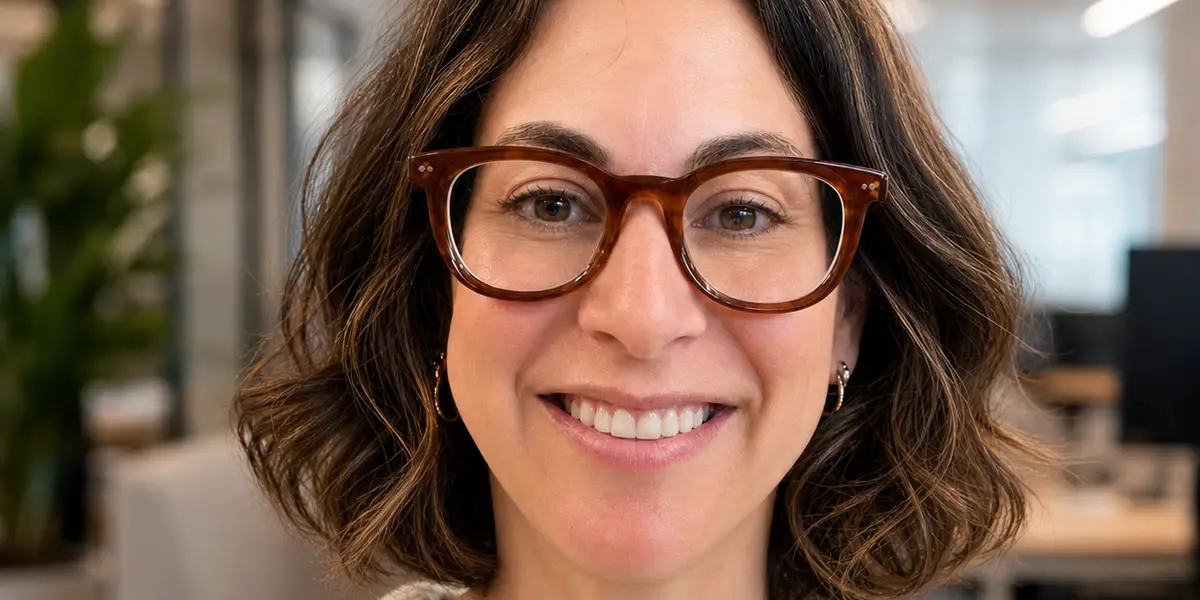
Nicole Diaz had never written code. Then she joined OpenAI’s legal team.
A year later, the associate general counsel now uses OpenAI’s apps to simplify and speed her legal work. She has built tools with ChatGPT and Codex, the company’s coding agent, to help turn dense law-firm memos into plain-English policies, triage employee email, draft replies, and track the results.
Read more Tokenmaxxing is entering its efficiency-maxxing era
“My sense of what’s possible,” Diaz said, “has rapidly expanded in the last six months, even three months.”
Diaz works in corporate compliance, a legal function focused not on the products OpenAI puts into the world, but on how the company conducts business, making sure employees follow the law and ethical standards. It’s also the kind of function companies tend to build out as they prepare for the scrutiny that comes with an IPO.
For the past year, Diaz has been using OpenAI’s technology to make that work faster and easier to manage. The tools do not replace her judgment, she said. They absorb the repetitive work around it.
That judgment was shaped by a traditional legal résumé. She learned the law at Harvard and the machinery of high-stakes litigation at Skadden, where she worked as an associate. Later, she moved into the client side as a compliance lawyer at Snap. None of those places taught her to build software. OpenAI changed that.
In this way, Diaz is the target of OpenAI’s pitch. The company is betting that artificial-intelligence agents can turn workers who never saw themselves as builders into people who make their own tools.
Her way of working also offers a window into a live debate in legal tech. As law firms and corporate legal teams weigh whether to buy specialized legal software like Harvey, Diaz shows what lawyers can do using frontier models directly.
A magic wand for policy-writing
The first place Diaz put ChatGPT to work was one of the least glamorous parts of corporate compliance: policy writing.
Law firms often send over policies thick with legal jargon and ten-dollar words — the kind of document that might work at a more bureaucratic company, Diaz said, but not at OpenAI. She used to rewrite those policies by hand, turning them into guidance employees could actually use.
She created a ChatGPT skill for that.
Skills let users turn a repeatable task into a set of instructions they can reuse, so they don’t have to write a lengthy prompt each time. Diaz created a skill she called “simplify.” Its job is to take legal policies and shorten sentences, cut legalese, and match the format of OpenAI’s policy templates.
Diaz still reviews the output herself and sends policies back to outside counsel for their approval. But she said the skill gets her to a workable draft much faster.
Read more Why Jensen Huang says now is an ‘incredible time’ to be a software company
Codex as a coworker
Employees often come to Diaz with questions about whether they need approval to take an advisory role, invest in a friend’s startup, or attend a fancy dinner with a government official.
Before, Diaz said, she relied on a Google Doc with draft responses for different types of asks. She still had to decide which guidance applied, write a response, and keep track of how the question was handled.
Now, Diaz uses Codex agents — artificial intelligence that can carry out tasks with little hand-holding — to help triage. Every day at 5 p.m., the system scans her inbox for emails about conflicts, sorts them by risk, and drafts replies based on her pre-written guidance.
An employee who asks about angel investing might get a standard response. Another who wants to join a trade association that also does lobbying might get a response asking for more information. Higher-risk disclosures are flagged for Diaz’s attention.
The system also keeps a log of the types of disclosures she receives, how she responds, and how long it takes to respond, giving her a better view of where employees are getting stuck and where OpenAI’s policies may need to be clearer.
She’s got (ChatGPT) skills
The tools still need work. One of Diaz’s biggest complaints is that their responses can sound too “lawyerly.” She’s working on an “about me” file that tells ChatGPT how she writes and talks, so she can plug it into different skills and make the output sound more like her.
It’s not the kind of thing they teach at law school. At OpenAI, learning to build seems to happen almost through osmosis.
There is no expectation that every lawyer suddenly becomes a Codex power user. Diaz credits a colleague, Bright Kellogg, with helping lead the legal team through a gentler kind of change management: sharing small lessons each week and highlighting examples of what other lawyers are building.
For Diaz, that peer learning has become part of the fun. Seeing other people’s tools can feel, she said, like trading Pokémon cards: one person has a skill with “really cool powers,” and someone else wants to try it, too.
Read more Everyone was watching Jensen Huang in Taiwan, but South Korea was where the AI trade was heating up
About the Author