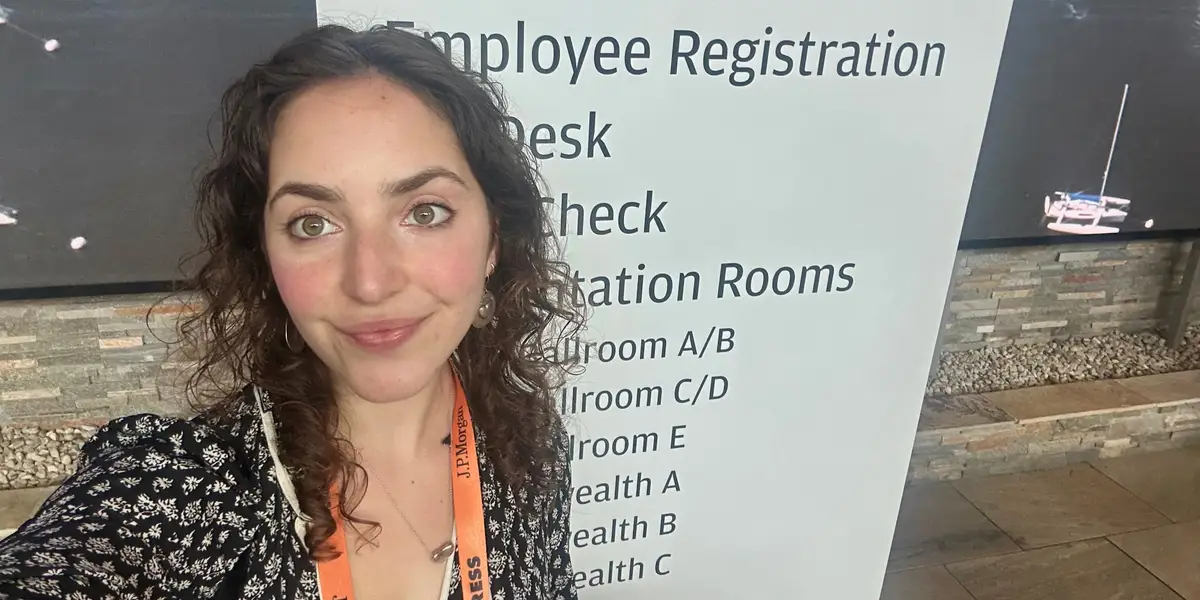
At JPMorgan’s tech and media conference this week, I watched from the luxury of my seat as attendees stood in the back of an overly air-conditioned conference room to hear executives discuss the infrastructure underpinning the AI boom.
Read more The craziest part of SpaceX’s IPO is also the most important
That’s not all that surprising during the biggest AI frenzy in decades, but the obsession overshadowed chatter about the potential of SpaceX, OpenAI, and Anthropic hitting public markets this year, or news about the technology itself. At the characteristically beige Westin Boston Seaport District hotel, some of the loudest conversations weren’t really about the companies selling the AI dream, but about the pipes beneath it.
The race to build out AI infrastructure has inaugurated one of the largest financing booms on Wall Street, with forecasts for data center development stretching into the trillions. Dealmakers across firms, from JPMorgan to Goldman Sachs to Apollo, are emerging as key players in the rush to capitalize the projects. David de Boltz, a managing director in JPMorgan’s leveraged finance capital markets in North America, told me that the capital requests his team is seeing are “astronomical,” and that demand for the deals remains healthy.
“To meet hyperscalers’ capex needs, every single market will need to be part of it: equity, investment grade, high yield, leveraged loans, private credit, convertibles,” he said.
JPMorgan’s three-day conference brought together AI companies, chipmakers, telecom operators, fintech firms, and the financiers behind them. The usual clichés persisted — graveyards of coffee cups, stacks of branded tote bags, a quorum of men in blazers and Zegnas waiting for their Ubers — but I was struck by the collective focus on good old-fashioned construction.
People weren’t only squished behind me to listen to Marc Ganzi, the CEO of digital infrastructure investor and operator DigitalBridge — the moderator at CoreWeave’s presentation quipped about how many were crushed into the room. Brannin McBee, the co-founder and chief development officer at CoreWeave, which pivoted from crypto-mining to become one of the leading AI infrastructure firms, said there are several bottlenecks to the buildout, including hiring enough skilled labor and securing equipment. By the end of last year, CoreWeave was operating 43 AI data centers, according to its website.
During his presentation, Ganzi, whose firm focuses on data centers, cell towers, and fiber networks, said that while everyone is focused on how to get enough power to operate the data centers, many have “slept on” the investment opportunity in the fiber networks that connect components of the AI ecosystem.
He isn’t alone in focusing on fiber: just last month, Meta unveiled a four-week program with real estate partner CBRE to train fiber technicians.
Read more ‘Starships’ singer Nicki Minaj makes surprise appearance at SpaceX Starship launch
Questions of supply are also bumping up against how quickly people and machines can actually build the massive data centers. de Boltz, the JPMorgan banker, said the construction risk now “is how long the build takes.” It usually takes two or three years to build one of the facilities, and that’s assuming there’s not much local pushback, a partner at Boston Consulting Group told my colleague earlier this month.
Data center owners and operators are building facilities to lease to hyperscalers like Google and Meta, whose AI ambitions require huge amounts of computing power. And as well-versed as I thought I was in byzantine leases, having rented apartments in New York City, I was shocked by the complexity and importance of the real estate agreements for data centers. A senior banker at the conference told me that investors don’t always appreciate how much leases themselves matter. It’s way riskier, they said, to sign on to a deal that lets a company step out of a lease and reassign it to a different, potentially less financially secure company.
“Not every data center lease is written the same, and you’re seeing that now with the market sort of creeping out about the penalties and the late deliveries,” Ganzi said during his presentation. “Data center operators, some of them are getting crushed because they signed a bad lease.”
But unlike some of the unlucky operators Ganzi mentioned, many companies downstream of the AI buildout are seeing a boom — Caterpillar, which makes heavy equipment used in construction, energy, and data center projects, has seen its stock rise more than 45% this year. During its first-quarter earnings call, the CEO said his construction industry’s sales were up 7% compared to last year, largely due to nonresidential projects. Power generation was up 48%, partly because of data center demand, and the excitement doesn’t seem to be slowing down. Caterpillar’s backlog ballooned to a record $63 billion, a 79% bump year-over-year, suggesting that demand is outpacing supply.
But while some of Caterpillar’s future orders seem guaranteed, executives and bankers at the conference cautioned that AI is moving at a remarkable pace — go out to get a coffee, and a new, groundbreaking model has dropped, or money you’d been banking on to build a data center has gone to someone else.
“You have to change, and you have to stay agile,” de Boltz told me. “It is, by far, the buy side and the sell side’s most important topic right now.”
Read more The big strategy themes behind Microsoft’s executive overhaul
About the Author