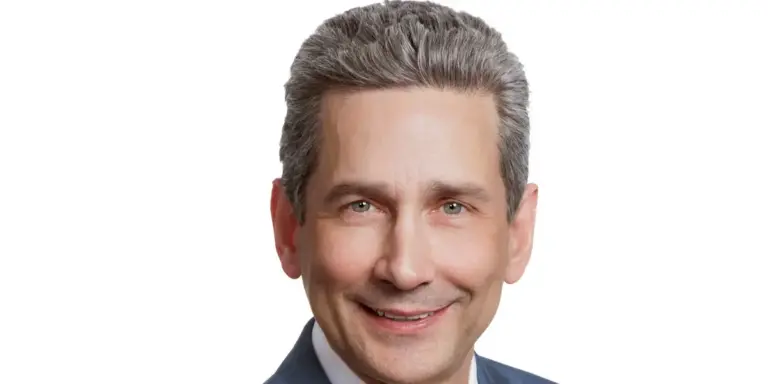
Wall Street has spent much of this year debating whether the AI boom has become a bubble. Goldman Sachs’ co-head of investment banking, Kim Posnett, thinks that’s the wrong debate.
Read more The AI doomsdayers aren’t new. You just weren’t paying attention.
“People are asking the wrong question about whether we’re in an AI bubble. I think the better question is whether AI will fundamentally change how companies operate, compete, and create value. And I think the answer to that question is clearly yes,” she told Business Insider.
Posnett has had a front-row seat to how corporate America is betting on that transformation. This year, Goldman has advised on some of the market’s biggest transactions, including landing the coveted lead position on SpaceX’s record IPO. Rather than a bubble, she sees an “AI investment supercycle” that will help fuel a boom in corporate spending and the dealmaking at the heart of her business.
Those who are fixated on whether and when a bubble will pop risk underappreciating AI’s potential value, Posnett said. That doesn’t mean every AI company will be a winner — the internet, for example, created both enormously valuable companies and some of the biggest bubbles to date.
“Those two things can be true at the same time. Sure, there may be bubbles inside the AI ecosystem, but I don’t believe that AI itself is a bubble,” Posnett said. “It’s because the productivity opportunity is too large and too broadly applicable across the economy.”
The ‘mega-cycle’ is even more mega
That broad applicability is helping supercharge the IPO and M&A markets, despite geopolitical and economic uncertainty.
The markets have exceeded Posnett’s own early-year expectations of an IPO “mega-cycle,” both because of large transactions and the activity across sectors. Through September 10, global IPO volume reached $206 billion, up 183% from last year, according to LSEG data.
As she sees it, the number of IPOs is a good indication of CEO confidence and investors’ appetite to fund “growth, innovation, and scale.”
Read more The foldable iPhone Duo gives you a bigger screen and bragging rights. Here’s what you give up.
While she didn’t comment on specific anticipated blockbuster IPOs — both Anthropic and OpenAI have filed initial paperwork to go public — Posnett said SpaceX’s record IPO was “an amazing experience.” Goldman’s longstanding relationships were crucial to landing the lead left spot, as they are in many transactions.
“These relationships are built over years, not months,” she said. “When companies want to do big transformative transactions, they want advisors who know them very well and can help them navigate complex decisions.”
Solomon said on a podcast in June that the firm’s relationship with SpaceX founder and CEO Elon Musk goes back 20 years, and that he’s personally known Musk for more than 15 years.
“As a firm, we’ve been long-term committed to Elon, his companies, his teams,” Solomon said, adding that his bank won the lead spot on the SpaceX IPO because of the decades-long ties.
Goldman has also outperformed on M&A this year, becoming the first bank to exceed $1 trillion in announced M&A volume over six months, CEO David Solomon said on the second-quarter earnings call. The global value of M&A deals reached $3.73 trillion through September 10, up 33% from last year, LSEG data found. Posnett said CEOs have gotten used to acting amid uncertainty, and that she’s noticed a “bias to action” right now regarding M&A.
Many corporate leaders are, perhaps unsurprisingly, focused on AI and innovation, and Posnett said they’re primarily concerned with having the necessary funds to achieve their goals. While each client conversation is different, and each client’s needs are unique, Posnett said one phrase has come up more than any other: “Scale of opportunity.”
Read more ‘I saw Terminator 2’: Y Combinator’s Garry Tan pushes back on AI extinction fears
About the Author