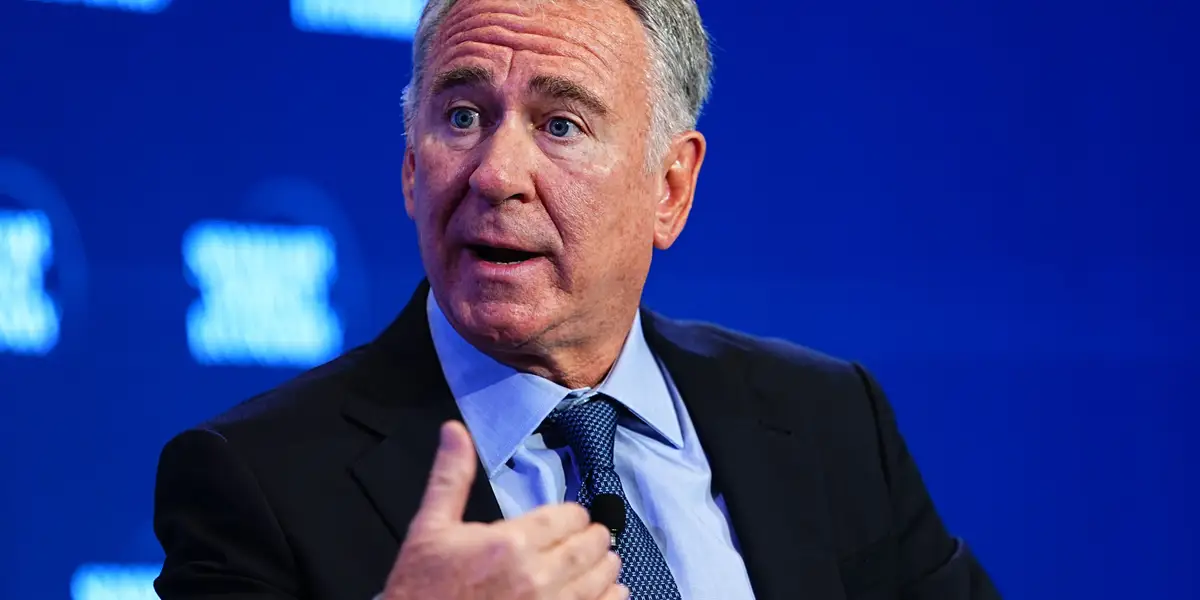
Ken Griffin says his hedge fund has de-risked the majority of the Situational Awareness portfolio it acquired, according to a letter to investors obtained by Business Insider.
Read more Tech tries a new message: You’d love data centers if China wasn’t making you hate data centers
The Citadel boss updated clients on the performance of Citadel Wellington Fund, the firm’s flagship multi-strategy fund that purchased a large portion of Situational Awareness’s investments last month as the AI hedge fund imploded.
The transaction strengthened Situation Awareness’s balance sheet and helped “mitigate the risk of a tail event,” Griffin wrote, later adding that the firm had removed around 80% of the risk from the investments it purchased.
“We have successfully shed more than 80% of the aggregate risk from the original portfolio. In this effort, we have completed nearly 100 block trades totaling over $4 billion in market value. These included the largest intraday block trades of the year in 10 different names,” the letter said.
Read more Walmart is giving shoppers something they’ve wanted for years: Apple Pay
Griffin added that, in the US, Citadel “quickly exited the vast majority of the vega risk,” or the risk that changes in expected volatility would affect the value of its options positions, “saving substantial capital in the process.”
Citadel Wellington gained 5.94% over the month of July, putting its year-to-date gains at over 12%, Griffin said.
Situational Awareness, the hedge fund led by AI wunderkind Leopold Aschenbrenner, faced a reckoning in July when many of the firm’s investments in AI chip and memory chip makers went south. Due to steep losses on its highly leveraged positions, the firm fire-sold most of its investments to Citadel for $16 billion.
Read more Why Anthropic’s AI watermark is going further than its rivals — for now
About the Author