Chinese investors are going wild for humanoid robots.
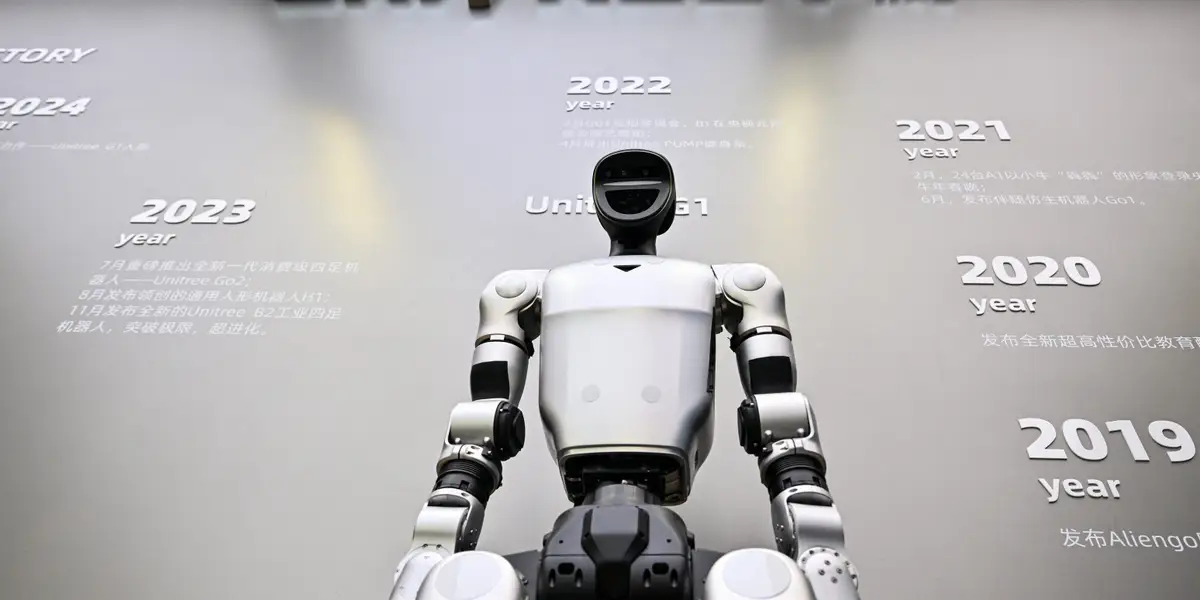
Shares in Unitree, a Chinese robotics company known for its dancing and backflipping humanoid robots, soared as much as 629% on Wednesday in its trading debut, before closing at 845 yuan ($125), up 460%.
Read more Microsoft AI’s CMO is leaving as the company rethinks consumer marketing efforts
The Hangzhou-based tech firm raised 6.1 billion yuan ($904 million) in mainland China’s first major IPO of a humanoid robotics company. The price of its shares skyrocketed to about $163 from the IPO price of $22 before paring back gains to close with a market cap of around $50 billion.
The frenzied demand for Unitree’s shares is a signal of just how red-hot China’s humanoid robot industry is.
The Chinese government has designated the technology as strategically important, and local firms like Unitree and AgiBot have leveraged the country’s tech supply chain to outpace their US rivals in shipments.
Chinese firms accounted for about 97% of global shipments of humanoid robots in the first half of 2026, according to data from Smart Analytics Global, with Unitree capturing around 31% of the market.
Unitree’s massive share price surge is a sign of how investors are betting on an industry with a lot of potential and strong backing from the Chinese government, even though the prospect of humanoid robots taking over factory jobs and serving as robotic butlers is still a long way off.
Broad adoption of humanoid robots in real-world environments has been limited by the complexity of the AI systems needed to navigate messy factory and home environments, and the difficulty of creating robotic hands as dexterous as a human’s.
In its IPO filings, Unitree reported around $41 million in net profit and $252 million in revenue last year, and at its IPO price, Unitree was valued at 219 times its 2025 earnings.
Earlier this month, Trace Cohen, the cofounder of US venture capital firm Six Point Ventures, wrote in a note that Unitree’s valuation already reflected considerable optimism as it faced the difficult task of converting rising robot shipments into durable commercial demand. “Growth from a tiny base is easy,” he wrote.
Unitree also faces additional headwinds from the US government’s ban on certain new foreign-made imported humanoid robots. US sales accounted for 13% of the company’s revenue last year, per its IPO filing.
Unitree has become a source of national pride in China, with a troupe of the company’s $13,500 G1 humanoids performing a display of kung fu at China’s annual Spring Festival Gala earlier this year.
Unitree’s other robots include a “Superman” humanoid that the company says can run faster than Usain Bolt, and the $650,000 GD01, a giant rideable mecha.
The blockbuster IPO attracted some of the biggest names in Chinese AI, with AI startup DeepSeek investing about $20 million.
It also propelled Wang Xingxing, Unitree’s 36-year-old founder, into the ranks of China’s ultra-rich, with hisstake in the company worth around $15.9 billion at market close.
Read more Bridgewater’s top investors are backing an AI startup to give smaller hedge funds more firepower
About the Author