A fusion startup backed by billions in funding is preparing for a different kind of test: capturing consumer attention.
Read more Uber now keeps most of the fare from your ride in some cities, according to a new driver study
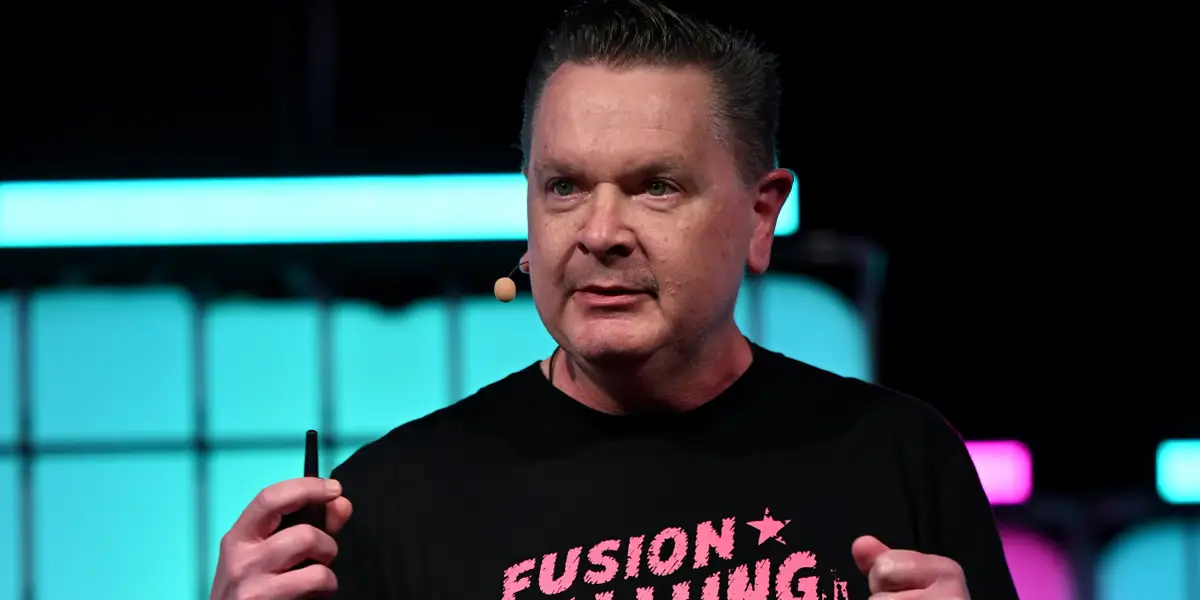
Joe Paluska is the chief marketing officer of Commonwealth Fusion Systems, an energy startup hoping to commercialize zero-carbon nuclear fusion power. CFS, which spun out of the Massachusetts Institute of Technology, is developing a process that fuses hydrogen nuclei using powerful, high-temperature superconducting magnets.
“My CEO and board want me to make that as exciting as the lunar landing of 1969, or as exciting as a SpaceX launch,” Paluska told CMO Insider in an interview.
“The key difference is they have rockets and stuff that’s visible and compelling to watch on social media or TV,” he said. “I have something that’s invisible.”
Paluska said creators will play a key role, as will a three-phased campaign over the next 18 months as CFS builds toward turning on its SPARC fusion energy machine for the first time, expected next year.
CFS has already generated interest among the investor community, having raised close to $3 billion from the likes of Google, Nvidia, and the actor Robert Downey Jr.’s FootPrint Coalition venture capital firm.
Now, Paluska is borrowing from the consumer marketing playbook to appeal to Gen Z and Gen Alpha in particular.
“When I speak to these groups, they have a pretty dystopian view of the world — rightfully so — with climate change, political polarization in the US and increasingly other places,” Paluska said.
“Their view of the world is pretty grim, and when I talk to them about fusion, they have hope for the future,” he added.
Read more This PE boss now asks AI for midnight help instead of waking up his junior employees
Unlike nuclear fission, which has high-profile advocates such as the TikTok influencer Isabelle Boemeke, a.k.a. @isodope, and former Miss America and pro-nuclear energy activist Grace Stanke, the landscape of nuclear fusion creators is sparse, Paluska said. Instead, CFS is ramping up outreach this year to creators across tech, entertainment, fashion, and food to help spread the word.
The company plans to soft-launch a marketing campaign dubbed “Humanity’s Power Move,” which it developed with the San Francisco brand strategy firm Supermoon, with employees next month. CFS is holding an all-company event called “Star Camp” on a mountain in Massachusetts, which Paluska said symbolizes its technology getting one step closer to “building a star in a jar” on Earth.
It’s planning more activity around Climate Week and the UN General Assembly in New York in September, the annual World Economic Forum meeting in Davos in January, and the energy conference CERAWeek in Houston in March. While specific media buys haven’t been confirmed, Paluska said it’s likely CFS will support in-person events with online and out-of-home ads.
The company is in the early stages of working on a documentary with the creative agency 400 Humans. Paluska said he was inspired by other science-based documentaries such as “Good Night Oppy,” about the Mars rover Opportunity; “The Thinking Game,” which told the story of Google’s DeepMind; and “Nike: Breaking 2,” which chronicled how the sports brand attempted to break the two-hour marathon barrier.
“Turning SPARC on is the Kitty Hawk moment for fusion, so we think it’s important to capture and tell this story to a worldwide audience,” Paluska said, referring to the town where the Wright brothers achieved the first powered flight.
Jeff Galak, associate professor of marketing at Carnegie Mellon University, said CFS will have to tread carefully in its strategy to position itself more like a lifestyle brand, given that Gen Z’s primary relationship with energy is rooted in climate anxiety and utility-level pragmatism, not hype.
“Trying to make an invisible, pre-commercial B2B infrastructure technology ‘cool’ to a generation hyper-sensitive to greenwashing is an incredibly uphill, and likely ineffective, battle,” Galak said.
Read more Companies’ new budget-friendly approach to AI could create a corporate caste system
About the Author