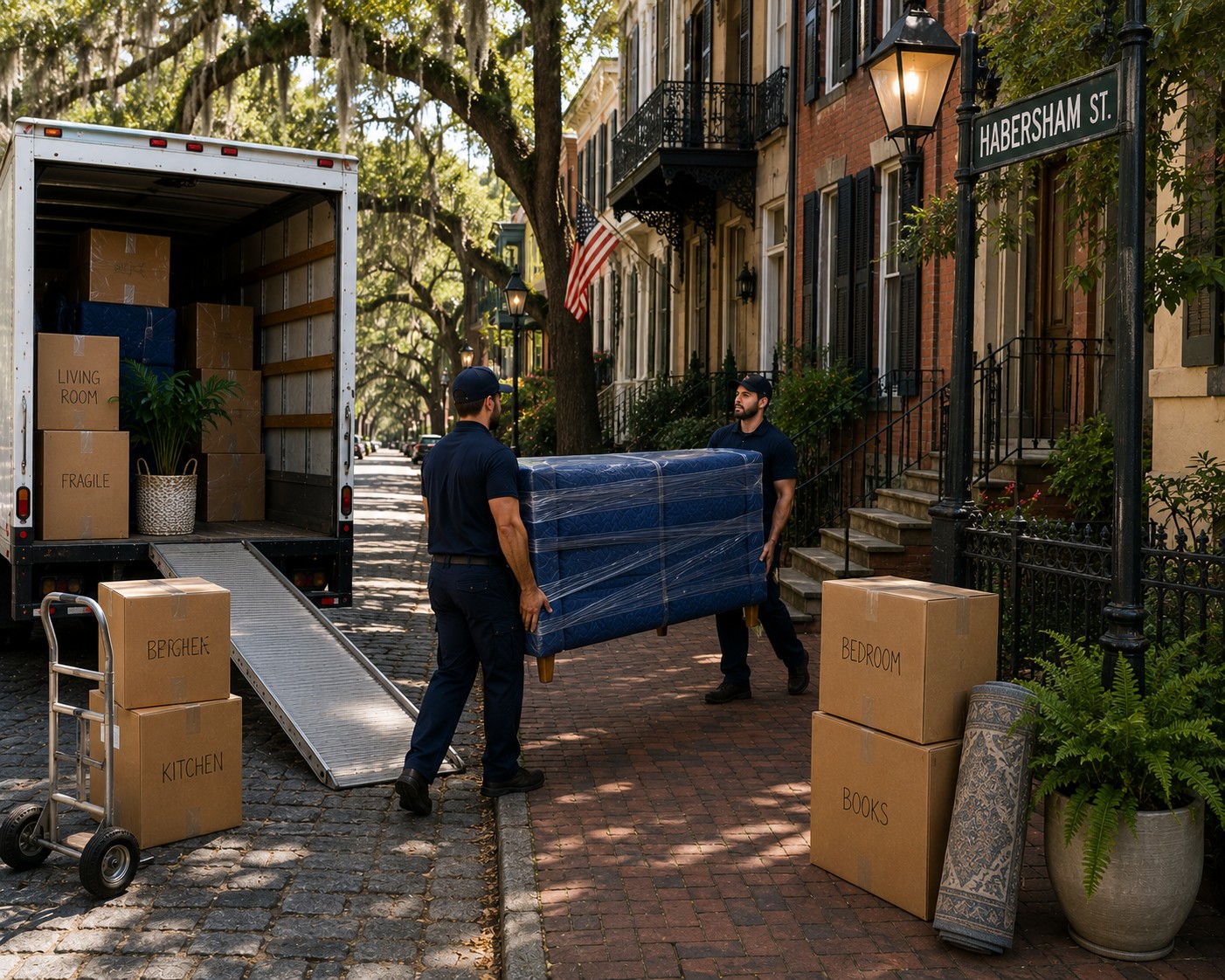
Moving out of Savannah’s Historic District requires a different kind of preparation. The challenge is often not the amount of furniture but the path it has to travel. Narrow streets, limited curb space, historic buildings, staircases, mature trees, and busy pedestrian areas can turn an otherwise straightforward relocation into a carefully timed operation.
For homeowners, the most useful preparation is to think about access before thinking about boxes. Every stage—from the apartment doorway to the street and from the truck to the new residence—should have a practical plan.
Start With the Street
The loading area can determine how the entire move unfolds.
Before moving day, inspect the street around the property and consider where a moving vehicle can safely stop. Look for parked cars, intersections, tree branches, construction activity, and other obstacles that could limit access.
If the truck cannot get directly alongside the building, estimate the distance between the vehicle and entrance. Carrying furniture across a longer distance can change the loading sequence and increase the time required.
Check the Timing
Street conditions can change significantly throughout the day. A location that appears accessible early in the morning may become much more difficult once traffic and parking increase.
Providing the moving team with accurate information about the street can help them prepare for the actual conditions rather than relying on assumptions.
Give the Building Its Own Inspection
Savannah’s historic properties can contain narrow hallways, steep staircases, decorative entrances, and unusual floor plans.
Walk through the building and identify every point where large furniture could encounter difficulty. Measure doorways if necessary and check whether sofas, wardrobes, dining tables, and other oversized pieces can make the required turns.
A professional moving team can then determine whether certain furniture should be disassembled or whether an alternative route is more practical.
Protect the Character of the Property
Historic interiors deserve attention during a furniture removal.
Clear decorative objects from hallways and staircases. Identify hardwood floors, painted trim, railings, glass doors, and other areas that could be vulnerable during the move.
Give Antique Pieces Special Attention
Older homes often contain furniture and décor that owners have collected over many years. Antique cabinets, mirrors, artwork, delicate tables, and heirloom pieces should be identified before loading begins.
Photograph particularly valuable items before they are moved and explain any fragile areas or removable components to the crew.
Organize the Shipment Before It Reaches the Truck

When street access is limited, every unnecessary trip between the home and vehicle can make the process less efficient.
Pack boxes according to destination rooms and label them clearly. Keep smaller cartons together and make sure furniture that requires disassembly is identified in advance.
This is where a carefully organized moving service can make a meaningful difference. Service information for relocation throughout Georgia is available at https://starvanlinesmovers.com/locations/georgia, including options suitable for different types of residential moves.
Plan for Stairs and Upper Floors
If the property does not have an elevator, the staircase becomes a major part of the moving route.
Remove rugs, decorations, plants, and other objects near the stairs. Keep the steps completely clear and make sure the landing areas provide enough room to maneuver.
For exceptionally large furniture, tell the crew about the dimensions before moving day. A wardrobe that cannot safely turn on a staircase may require a different approach.
Keep Personal Essentials Out of the Shipment
Moving through a busy historic neighborhood can take longer than expected. Keep important personal belongings separate from the main shipment.
A small essentials bag should contain keys, identification, documents, chargers, medications, toiletries, basic clothing, and anything needed during the first night.
Valuables and irreplaceable paperwork should remain with you rather than being placed inside standard moving cartons.
Prepare the Destination Before Leaving Savannah
The new property deserves the same attention as the old one.
Check where the truck can park, whether stairs or elevators are involved, and whether the entrance provides sufficient clearance for larger furniture. Decide where major pieces should go before unloading starts.
If the destination is another urban property, these preparations can be just as important as the challenges at the Savannah address.
Use Professional Coordination to Reduce Delays
When comparing Best Moving Services, consider how the company handles properties with restricted access rather than focusing only on transportation.
Ask about difficult loading areas, large furniture, stairs, packing, and scheduling. A crew that knows the property’s limitations beforehand can arrive with a more suitable plan.
Information about professional moving options can also be reviewed at https://starvanlinesmovers.com/ before arranging the relocation.
Make Every Trip Count
A successful Savannah Historic District move depends on controlling the details that can be controlled. Clear the interior route, understand the street conditions, prepare oversized furniture, protect historic features, organize the shipment, and keep essential belongings separate.
When the loading route has been considered before the first piece of furniture moves, limited street access becomes a logistical factor rather than an unexpected obstacle. That preparation allows the moving crew to work methodically while giving homeowners greater control over a complicated urban relocation.
About the Author