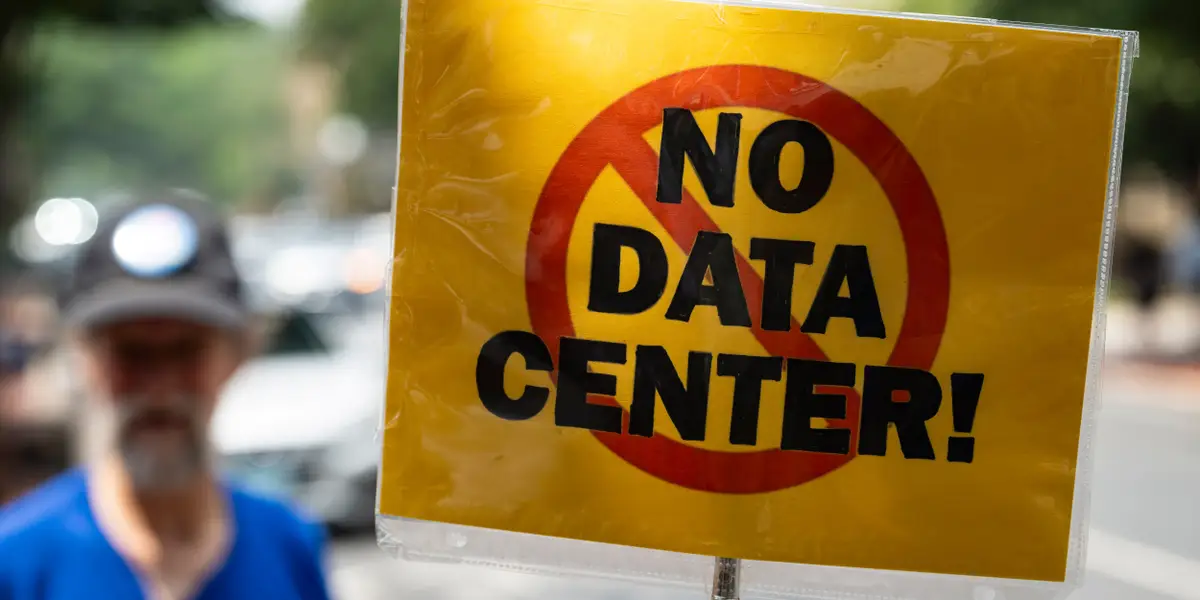
In a country that doesn’t tend to agree on anything, Americans are aligning on something: no data centers in their backyards.
Read more The prediction markets are catching on with Wall Street interns
For all the growing anti-AI sentiment, the tech still has plenty of fans. The infrastructure powering it is a different story, though.
A Gallup survey earlier this year found that 70% of Americans don’t want data centers built where they live.
(If you would welcome a data center in your neighborhood, we’d legitimately love to hear from you. Drop me a line.)
Supporters of the tech are now reckoning with a population that’s pushing back against a key piece of their AI plans.
On Wednesday, President Donald Trump told reporters data centers “could use a little public relations help.” He remains supportive, adding that “if I were a governor or a mayor, I would want that plant in my community.”
Yesterday, venture capitalist Chamath Palihapitiya chimed in, calling data-center backlash a “powder keg” that AI executives have “failed miserably” at addressing.
Overcoming the bad vibes around data centers is a battle on multiple fronts.
The immediate response from some AI giants has been to throw money at the problem.
Meta recently announced a plan to invest $1 billion in towns where it’s building data centers. It already deployed a similar strategy in Louisiana, where teachers got a one-time bonus of up to $50,000 because of a Meta data center.
Cash is a great way to get people on your side. But looking at some of the beefs people have with data centers shows that’s not necessarily a silver bullet.
One of the main issues raised is the strain data centers put on local grids due to the immense power they require. Some companies have tried solving that by building their own power supply … but that could cause even more problems with locals.
If you don’t like our data centers, just wait until you see our nuclear power plants.
Noise pollution is another big gripe. Data centers produce a constant hum, like a giant white-noise machine you can’t turn off.
There are ways to reduce the noise, but it comes at an additional operational cost. And for an industry already getting criticized for its big-budget spending, that could be a tough sell.
And then there’s the jobs aspect. Data-center buildouts create plenty of temporary gigs. But once it’s up and running, a data center typically only requires a few hundred employees to maintain it.
More permanent jobs could be the key. Plenty of people worry about AI taking their jobs. Data centers are the giant, physical embodiment of those fears, peering through back windows.
If the arrival of the data centers means more jobs for everyone in town, people might be a lot more welcoming of their new neighbor.
About the Author