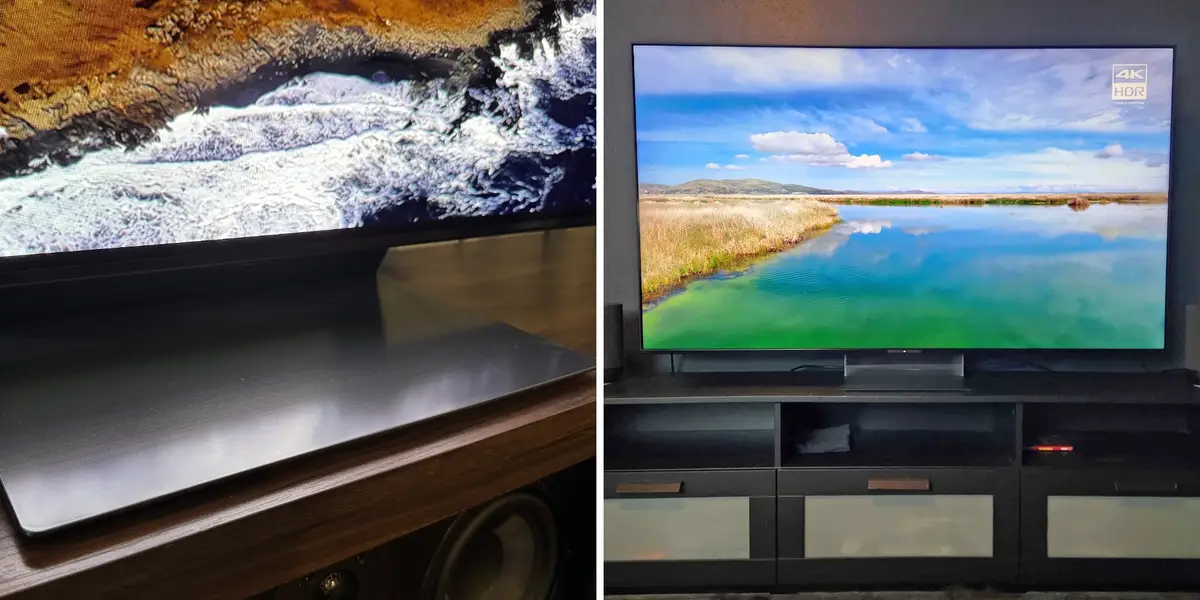
As much as I love extra-large TVs, they’re not always the right fit. A massive screen can be great in certain spaces, but for a bedroom, apartment, or smaller living area, a more compact set is often the smarter choice. That’s where the best 50-inch TVs (and a few great 48-inch options) really shine. And after years of testing home entertainment gear, I’ve found that stepping down in size doesn’t mean you have to settle for worse picture quality.
Read more Handshake AI wants to pay you up to $30K for work documents that you own
My favorite option right now is the Samsung S90F, a 48-inch OLED that delivers deep black levels and an infinite contrast ratio. If you’re looking to spend less, the first-generation Amazon Omni QLED remains a strong budget pick. It regularly falls below $400 and delivers better contrast and richer color than a lot of similarly priced 50-inch TVs.
Those aren’t your only good choices, either. Sony and TCL also make some excellent 50-inch sets, with options suited for gaming, movie nights, and everyday streaming. Whatever you’re shopping for, there’s a great pick for you below.
Our top picks for the best 50-inch TVs
Best overall: Samsung S90F – See at Amazon
Best entry-level: Amazon Omni QLED – See at Amazon
Best budget Mini LED: TCL QM6K – See at Amazon
Best RGB LED: Sony Bravia 7 II – See at Sony
Best overall

The Samsung S90F OLED is one of our favorite midrange TVs. This 48-inch model lacks the enhanced brightness and color found in larger sizes, but it still offers some of the best contrast and viewing angles available at this size.
What we like
What we don’t like
The Samsung S90F is an excellent fit for anyone who wants a compact screen without sacrificing premium picture quality. It’s one of the few OLED TVs offered in a 48-inch screen size, giving it a clear advantage over LED and QLED models that dominate this tier.
I previously recommended the LG C5 OLED in this spot. The C5 and S90F are very similar TVs, but the 48-inch C5 is now hard to find in stock and tends to cost more when it is available. With that in mind, the S90F is now the better buy for most people.
The S90F offers all the key benefits that the best OLED TVs are known for: true black levels, pixel-level contrast, and wide viewing angles. While LED and QLED sets often appear washed out in a dim home theater, the S90F delivers inky contrast in dark rooms. It also maintains consistent image quality from nearly any angle, so colors don’t distort if you sit to the side of the screen. (See our QLED vs. OLED comparison for a deeper breakdown of the differences.)
Our reviewer tested the 65-inch S90F, which reached a peak brightness of around 1,457 nits. However, the 48-inch version uses a less advanced type of OLED panel, which typically offers around 750-800 nits. Though dimmer than its larger counterpart, that’s still excellent for a 48-inch TV. That level of brightness, combined with OLED contrast, makes high-dynamic-range (HDR) content look bold and vibrant.
The set uses Samsung’s Tizen smart TV platform, offering access to all of the most popular streaming services and built-in Bixby or Alexa voice support. Tizen can be a bit clunky, but overall navigation is solid. Gamers get plenty to like here, too, as the S90F supports a 120Hz refresh rate for the latest consoles and up to 144Hz when connected to a PC. This makes it a good pick for people who want an extra-large gaming monitor.
At a typical price of around $800-$1,000, the S90F sits on the high end for a 48-inch TV, but the upgrade in image quality over cheaper LED and QLED TVs is substantial.
Read our Samsung S90F TV review.
Check out our guides to all the best TVs and best Samsung TVs.
Best entry-level

Though we think the larger versions of Amazon’s Omni QLED TV are overpriced for what you get, the 50-inch model offers an excellent balance between cost and performance. It has handy Alexa features and is one of the only 50-inch TVs available with local dimming, which enables solid contrast performance.
What we like
What we don’t like
The Amazon Omni QLED is the best 50-inch TV on a budget. It uses a QLED panel to offer solid color performance and a decent peak brightness of about 500 nits. That’s dimmer than I generally recommend for larger TVs, but solid for this size and class. The Omni QLED also features local dimming, which enhances contrast by allowing the panel to adjust brightness in specific areas of its screen.
But unlike higher-end QLED TVs, such as the TCL QM6K, this model uses standard-sized LEDs rather than Mini LEDs. This means it has fewer zones to work with, leading to less uniform black levels. Our reviewer also noticed delayed dimming, leading to occasional brightness fluctuations.
Still, few 50-inch TVs can achieve this level of image quality at this price. Most competing budget models lack local dimming entirely, and many have a narrower color range.
That said, the Omni QLED isn’t immune to other common drawbacks of TVs in this class. Namely, it has limited viewing angles, so contrast and color are distorted at angles. It’s also restricted to a 60Hz refresh rate, so you can’t unlock 120Hz support on a gaming console or PC.
The Omni QLED utilizes Amazon’s Fire TV operating system and includes an Alexa voice remote. It also supports hands-free digital assistant functions, similar to those on an Echo speaker, which is a nice perk for such a budget-friendly set.
Read our Amazon Omni QLED TV review.
Check out our guide to the best Amazon Fire TVs.
Best budget Mini LED

The QM6K is TCL’s most affordable Mini LED TV, and it’s one of the few displays of this type available in a 50-inch screen size. It offers solid contrast and brightness for its class, beating many cheaper sets.
What we like
What we don’t like
The TCL QM6K is the best 50-inch TV for anyone who wants affordable Mini LED performance at this size. TCL didn’t initially offer a 50-inch model when the QM6K launched in 2025, but its recent addition to the lineup gives compact-TV shoppers a compelling new option.
The QM6K combines a Mini LED backlight with local dimming, allowing it to deliver better contrast than TVs that use standard-sized LEDs, such as the Amazon Omni QLED. It also uses quantum dots to expand its color range. Together, those features give the QM6K a level of picture performance that’s uncommon in its class.
I was particularly impressed by how well its backlight manages dark scenes. Black levels aren’t as deep as what you’ll get from flagship displays, but they look richer and more consistent than they do on most budget TVs. The QM6K also keeps blooming under control, so bright objects against dark backgrounds aren’t surrounded by distracting halos.
The main compromise is HDR brightness. I measured 557 nits with a 10% HDR test pattern and 736 nits with a 50% pattern. That’s solid output for an affordable 50-inch TV, but it falls short of the roughly 1,000 nits I look for to deliver a truly high-impact HDR presentation. Viewing angles are another weakness, with colors and contrast losing accuracy as you move off to the side. However, off-axis performance is noticeably better than it was on TCL’s older Q65.
Gamers get an unusually strong feature set for this price and size. The QM6K can run at up to 120Hz with compatible consoles and 144Hz with a PC, enabling smoother gameplay in titles that support higher frame rates. That makes it an especially versatile budget pick if your 50-inch TV will double as a gaming display.
Finally, the QM6K runs Google TV, which offers straightforward navigation and easy access to popular streaming apps. I’ve run into occasional software quirks with some older TCL models, but I didn’t experience any glitches while testing the QM6K. For buyers who want to step up from a basic 50-inch LED or QLED without spending much more, the QM6K’s Mini LED backlight, strong contrast, and high-refresh-rate gaming support make it an excellent value.
Read our TCL QM6K TV review.
Check out our guide to the best budget TVs.
Best RGB LED

The Bravia 7 II is the only RGB LED TV currently offered in 50 inches. This backlight technology delivers some of the best color and brightness performance available at this size.
What we like
What we don’t like
The Sony Bravia 7 II is part of Sony’s new True RGB TV lineup, and it’s the only RGB LED display currently available in 50 inches. This makes it the best 50-inch TV for viewers who crave cutting-edge color performance.
Rather than relying on the white or blue LEDs used in typical QLED and Mini LED TVs, Sony’s True RGB system employs separate red, green, and blue diodes. The result is a broader range of purer, more vibrant colors. During my testing, I measured about 87% of the expansive BT.2020 color space and nearly 100% of the more commonly used P3 gamut. Few movies and shows take full advantage of BT.2020 today, but that extra color capability gives the Bravia 7 II plenty of headroom for future content.
Sony’s RGB backlight also helps the Bravia 7 II deliver outstanding contrast that’s noticeably superior to cheaper 50-inch sets like the TCL QM6K and Amazon Omni QLED. Black levels look deep enough to blend into a dark room in many scenes, and distracting halos around bright objects are almost nonexistent. I did notice a small amount of light creeping into the black bars of some widescreen movies, but general backlight control is excellent.
The set is exceptionally bright as well. I measured around 2,243 nits on the 65-inch model, and the 50-inch set should offer similar performance. That’s enough to make the Bravia 7 II one of the brightest 50-inch TVs on the market, and it gives HDR highlights plenty of punch.
Viewing angles are also solid, especially for an LED-based TV. During an HDR scene from “Ex Machina,” red lighting maintained its intensity surprisingly well when I moved off-center. That’s a useful perk if you’re placing a 50-inch TV in a room where people won’t always be sitting directly in front of the screen.
The Bravia 7 II uses the Google TV platform, which I find responsive and straightforward, with a strong selection of features and Gemini AI voice controls. Sony’s Mirage Stand is another nice touch. It uses optical refraction to disguise cables running behind the stand, helping the TV maintain a cleaner appearance.
For shoppers who want a premium TV at this size, the Bravia 7 II gets remarkably close to delivering flagship performance while offering something no other 50-inch model currently does: an RGB LED panel.
Learn more about RGB technology in our RGB LED vs. Mini LED comparison.
Check out our guide to all of the best Sony TVs.
How we pick 50-inch TVs
To choose the best 50-inch TVs, my team and I conducted hands-on tests informed by more than a decade of experience covering home theater products.
While we usually review 65-inch TVs (since brands often treat that size as their flagship), most TV models share the same core specs and features across sizes, with the main differences coming down to screen size and peak brightness.
That said, certain TV models, like the Samsung S90F, feature bigger differences across certain sizes. When features or design vary meaningfully by size, we detail those differences, explain how they relate to our test results, and discuss how they may impact performance.
When evaluating TVs, we test picture clarity, contrast, HDR brightness, color performance, off-angle viewing, refresh rate, gaming features, smart TV performance, and overall value. We measure brightness using a colorimeter and rely on Calman software and test patterns from the Spears & Munsil UHD HDR Benchmark 4K Blu-ray disc or pattern generator for objective image checks.
We also spend plenty of time watching real-world content on every TV, along with specific scenes chosen to test certain picture-quality elements. Our demo material includes movies, TV shows, live TV, and streaming content— from standard definition up to 4K — viewed in both bright and dark rooms to see how each TV performs in everyday conditions.
For more info on our testing process, visit our breakdown of how we review tech products.
Meet the expert behind this guide:
Steven Cohen, senior tech editor: I’ve been writing about home entertainment gear for more than a decade, and I get hands-on with new TVs year-round. I also studied film production, so I’m especially picky about picture accuracy and making sure movies and shows look the way they’re supposed to. When I evaluate a TV, I use calibration tools and test patterns, but I don’t stop there. I also live with TVs like I would with any set I own at home, streaming movies, watching sports, and flipping through everyday content to see how it really holds up. My goal is to translate all my test results and real-world viewing into clear advice so you can find a great 50-inch TV without paying more than you need to.
Learn more about the Reviews team at Business Insider.
50-inch TV FAQs
What should you look for when buying a 50-inch TV?
When you’re shopping for the best 50-inch TV, I recommend focusing on a few key factors. First is picture quality. OLED models (sold in 48 inches) offer the best contrast, black levels, and viewing angles. However, they’re pricey, and only a couple of models are available in this size. Though their image quality isn’t as good, there are a lot more QLED and LED TVs sold in 50 inches, and they typically cost a lot less than OLEDs.
If you play video games, pay attention to refresh rate (60Hz vs. 120Hz) and features like HDMI 2.1 for smoother performance. Smart TV platforms matter, too. Roku, Google TV, Fire TV, webOS, Tizen, and Vizio OS all have different interfaces, voice assistants, and unique features.
And finally, think about your budget: you can get a solid 50-inch TV for a few hundred dollars, but spending more usually gets you better brightness, color, and overall build quality.
Is 50 inches a good size for a TV?
The best 50-inch TVs are ideal for buyers who need a compact display that fits in a smaller room or on a smaller TV stand. However, most 50-inch TVs tend to veer toward entry-level performance, with fewer midrange and high-end models available in this size.
For instance, none of our picks for the best TVs for picture quality are currently available in sizes smaller than 55 inches. That said, there are a few mid- and premium-tier exceptions, such as the Samsung S90F and Sony Bravia 7 II. But generally speaking, most 50-inch TVs are built with budget and lower midrange performance in mind.
If you want a larger selection of higher-end display models to choose from, check out our guides focusing on larger TVs:
- The best 55-inch TVs
- The best 65-inch TVs
- The best 75-inch TVs
- The best 85-inch TVs
- The best 100-inch TVs
And if you need an even more compact display, check out our guide to the best 43-inch TVs.
Why are some TVs sold in 48 inches rather than 50 inches?
This mostly comes down to how different TV panels are manufactured in factories. LCD-based TVs, including LED and QLED models, are typically offered in 50-inch sizes, as that size works well with the screen-cutting process on existing LCD production lines. But it’s more efficient to produce OLED TVs in a slightly smaller 48-inch screen size, since this allows brands to manufacture more units with less waste.
How much should a 50-inch TV cost?
The best 50-inch TVs cost between $200 and $1,600, depending on the display type.
Entry-level LED models from value-friendly brands like TCL, Hisense, Amazon, and Vizio cost around $200-$250. These options are suitable for casual viewing but often lack advanced features such as quantum dots and local dimming. Lower-midrange QLED sets range from $300 to $600 and offer better color, higher contrast, and brighter panels. However, many of our favorite upper-midrange QLED models are not sold in 50 inches.
Likewise, high-end 50-inch TVs are hard to come by, but you can find a couple of OLED models, like the Samsung S90F, and Sony’s new Bravia 7 II True RGB TV in this size for around $800 to $1,600.
Many 50-inch TVs go on sale throughout the year, but the biggest savings are typically found during events like Prime Day and Black Friday, as well as around major sports championships like the Super Bowl and March Madness.
Do 50-inch TVs have good sound quality?
Most TVs, especially smaller ones like 50-inch models, offer mediocre sound quality. To keep costs down and fit speakers inside compact displays, manufacturers use small audio drivers that limit the range, depth, and clarity of a TV’s built-in sound system. To get the best sound quality, we recommend buying a separate soundbar or speaker setup to pair with a 50-inch TV.
Read more Waymo pioneer Sebastian Thrun is building a new robotics startup
Check out our soundbar and speaker guides to see our top recommendations:
- The best soundbars
- The best budget soundbars
- The best soundbars with subwoofers
- The best Dolby Atmos soundbars
- The best Bose soundbars
- The best Sonos soundbars
- The best surround sound systems
Learn more about immersive surround sound in our Dolby Atmos explainer.
About the Author