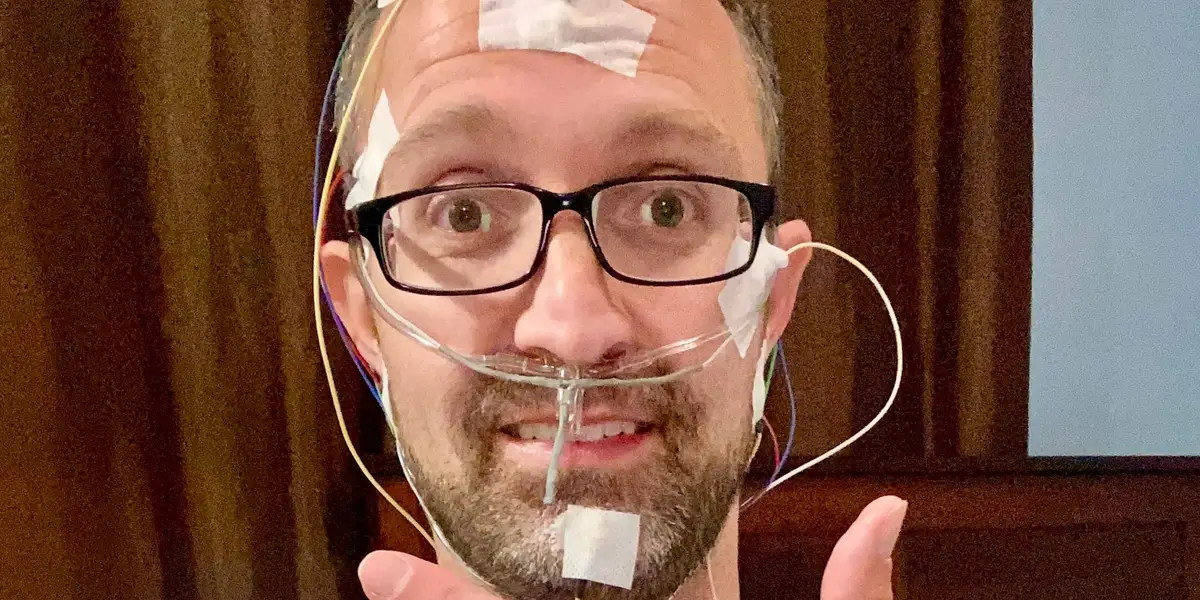
At 24, Dustin Freckleton suffered a stroke during his first year of medical school that left him temporarily paralyzed on one side of his body and searching for answers.
Read more ‘Crazy overvalued’: Scott Galloway says SpaceX is a ‘$10 to $30 stock’
Nearly seven years later, he was diagnosed with sleep apnea — a disorder where airways are blocked during sleep, and that is linked to increased stroke risk. Freckleton also said he had atrial fibrillation, an irregular heartbeat.
The health challenges led him to found Happy Health, a startup building an AI-powered smart ring that aims to help physicians diagnose sleep apnea in days.
The company emerged from stealth on Tuesday after raising $75 million across multiple rounds since 2019 from ARCH Venture Partners and OpenLoop. Freckleton said both have continued to back Happy Health as it has crossed milestones such as manufacturing, clinical validation, and Food and Drug Administration clearance for its ring.
The last tranche of funding closed in 2025. Freckleton said tens of thousands of people have used Happy’s platform to date. He declined to disclose the company’s valuation or revenue.
Happy Health says it builds more than a smart ring
Happy’s ring collects biometric data while users sleep and analyzes it with AI. It also offers a broader care platform. After testing, patients can meet with a doctor in the company’s physician network, who can diagnose them and prescribe treatments like CPAP machines or dental devices.
Read more Unitree unveils a robot it says can run faster than Usain Bolt ahead of its IPO
Freckleton said this healthcare ecosystem distinguishes it from rivals. “If you want to track your bad sleep, go to Oura,” he said. “If you want to fix your bad sleep, come to Happy.”
Patients can purchase the system online or be referred by a doctor. It costs $396 out of pocket — including the ring, one year of sleep tracking, and physician consultations — and it is often covered by insurance, Freckleton said.
Freckleton envisions the ring monitoring other conditions down the line. He said the company launched with sleep apnea because it often goes undiagnosed and is linked to chronic conditions like heart disease and diabetes.
Here’s a look at the pitch deck that helped Happy Health raise $75 million. The deck has been redacted so that it can be shared publicly.
Read more Is ChatGPT dropping more f-bombs lately? Users think so.
About the Author