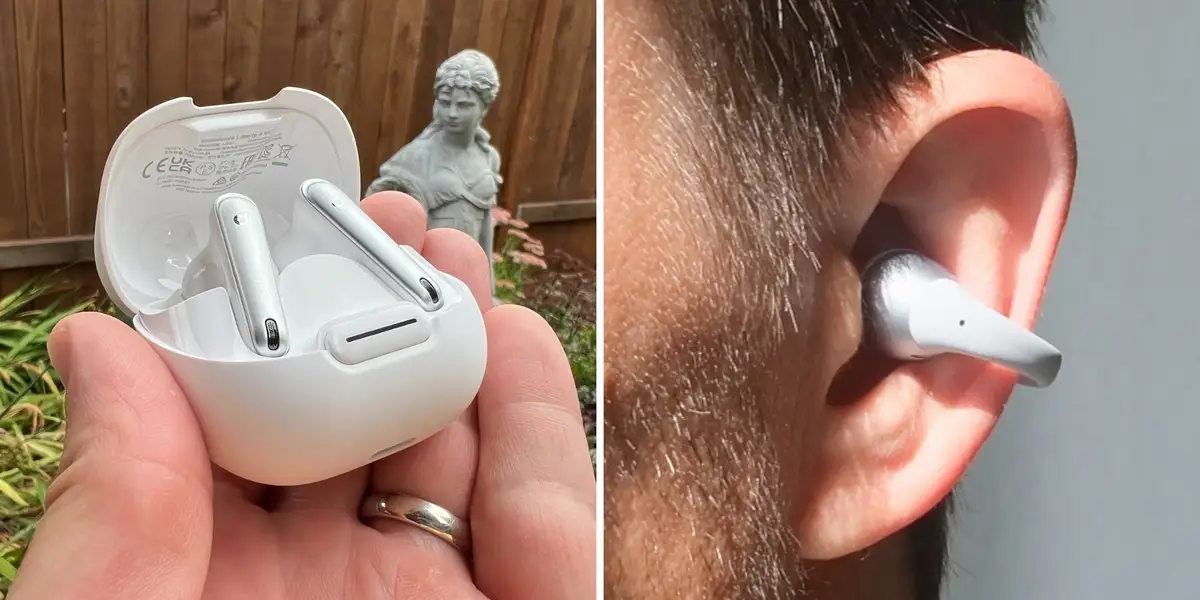
Apple’s AirPods are popular earbuds, but they’re not the right fit for everyone. If you’ve got an Android device, you’ll get more features and better integration with earbuds built for your phone. And even for iPhone users, sticking with Apple isn’t the only way to get excellent audio and powerful active noise cancellation (ANC). After testing dozens of models, we’ve pulled together the best AirPods alternatives you can buy in 2026.
Read more Has AI reached the singularity? What smart people are saying about Sam Altman’s claim
Our recommendations offer good sound quality, solid battery life, and wide device compatibility — often at a lower price than AirPods. Our top pick is the Beats Fit Pro. Though not AirPods, they’re made by Apple and offer a secure fit while playing nice with both iPhones and Android phones. Looking to spend less? The Soundcore Liberty 4 NC are a standout budget option, delivering a surprisingly rich feature set and an AirPods-like design for under $100.
Below, you’ll find our full list of the best AirPods alternatives. Whether you use an iPhone or Android, or switch between the two, there’s an option here that should fit both your needs and your budget.
Our top picks for the best AirPods alternatives
Best overall: Beats Fit Pro – See at Amazon
Best on a budget: Anker Soundcore Liberty 4 NC – See at Amazon
Best for working out: Beats Powerbeats Pro 2 – See at Amazon
Best noise-canceling: Bose QuietComfort Ultra (2nd Gen) – See at Amazon
Best open ear: Shokz OpenDots 2 – See at Amazon
Best overall

The Beats Fit Pro are the perfect double agents, bringing all the best Apple-friendly features alongside handy Android extras for a great experience across devices, whether you listen at home, at the gym, or on the trail.
What we like
What we don’t like
The Beats Fit Pro are basically the “AirPods for everyone,” which is why they make such a strong alternative. They use the same Apple H1 chip found in older AirPods, giving iPhone users familiar perks and seamless integration with Apple devices. But unlike AirPods, the Fit Pro also support a dedicated Android app, making them just as friendly to Android owners as they are to Apple fans.
Design-wise, the Fit Pro skip Apple’s signature stem in favor of a flexible wing tip that keeps them securely in place. They’re comfortable enough for long listening sessions, available in several colors, and offer IPX4 water resistance for workouts or rainy commutes.
iPhone users get all the expected conveniences: one-touch pairing, Automatic Switching across iCloud devices, Find My support, and hands-free Siri. Android users aren’t left out, either — the Beats app adds one-touch pairing, customizable controls, and battery readouts. These are features AirPods don’t offer when paired with an Android phone, giving the Fit Pro a meaningful edge for listeners outside the Apple ecosystem.
The earbuds also deliver strong active noise cancellation and a natural transparency mode, as well as support for Apple’s spatial audio with dynamic head tracking. Even without spatial audio, their sound profile is clear and balanced, offering more detail and restraint than the bass-heavy tuning of old-school Beats headphones.
You also get convenient features like automatic ear-detection sensors that pause playback when you remove a bud, along with simple one-button controls. Battery life holds up well, too, at around six hours with noise canceling on, plus an additional 18 hours from the charging case. The case is the Fit Pro’s weakest point: it’s bulkier than many modern alternatives and doesn’t offer wireless charging.
Still, those drawbacks are minor compared to everything the Fit Pro get right. If you’re looking for the best AirPods alternative that works seamlessly with both iOS and Android devices, these earbuds remain our top pick.
Best on a budget

Anker’s Soundcore Liberty 4 NC earbuds offer tons of handy features and great noise canceling performance that’s shockingly good for the money.
What we like
What we don’t like
Anker’s Soundcore Liberty 4 NC are supercharged buds at an extremely low price. We honestly can’t believe just how much these AirPods-esque earbuds offer for the money, redefining our expectations of how good budget buds can be. They’re also notable for their stem-like design, which resembles Apple’s classic AirPods.
The Liberty 4 NC have noise-canceling quality that nearly mops the floor with similarly priced competitors. Only Anker’s own Space A40 earbuds can compete in this price range, with the Liberty 4 NC offering a slight edge. This is quality canceling, especially with low frequencies. The adjustable transparency mode isn’t quite as impressive, but it does the trick, letting you choose between vocal and full transparency depending on your situation.
Sound quality is also impressive. We experienced a clean, spritely midrange and treble response, with full, musical bass. The sound signature is a little snappy by default, but you can tame it with the multi-band EQ in Anker’s loaded app.
When it comes to features, the Liberty 4 NC have a version of nearly everything there’s a name for, from sound personalization and wind-buffering to high-resolution playback with Sony’s LDAC audio protocol. You’ll also get an earbuds finder, low-latency gaming mode, multi-point audio for quickly switching between source devices, and more. Battery life is also among the best in class, offering up to 10 hours of playback per charge. However, we achieved closer to seven hours with noise canceling engaged in our tests.
Like any pair of budget buds, not everything is top-flight. The touch controls are easy to customize, but they’re not always as responsive as pricier buds. Additionally, some features, such as auto-pause, take longer than expected to activate. Still, it’s hard to complain, considering all the Liberty 4 NC offer. If you want high-roller features on a budget, these are your earbuds.
Check out our guide to all the best budget headphones.
Best for working out

The Powerbeats Pro 2 are excellent fitness earbuds with secure ear hooks, great sound quality, and built-in heart rate monitoring. They also deliver solid noise-canceling and use the same H2 chip found on the latest AirPods.
What we like
What we don’t like
Great workout earbuds need to fit securely while being adaptable to different environments, blocking out noise during intense gym sessions while staying open to the world during outdoor runs. The Beats Powerbeats Pro 2 nail that balance, making them an excellent fitness-focused alternative to Apple’s AirPods.
This is especially true since the Powerbeats Pro 2 actually use the same H2 chip that powers the latest AirPods Pro 3 and AirPods 4. This means the earbuds support many Apple-friendly features, including Find My Tracking, Audio Sharing, Ultra-Low Latency, and iCloud Pairing.
Like the latest AirPods Pro 3, the Powerbeats Pro 2 also feature built-in heart rate tracking, which records health data and syncs with the Apple Fitness app on an iPhone. This also works with third-party apps on Android phones.
Although not as powerful as the AirPods Pro 3, these in-ear buds deliver effective active noise cancellation (ANC) to mute clanging weights and gym chatter. Their transparency mode does a great job of letting in ambient sounds, allowing you to stay alert to traffic while running.
The Powerbeats Pro 2 earbuds also offer punchy sound quality without muddying vocals or instruments. Whether you’re pushing through heavy lifts or a long cardio grind, the Powerbeats Pro 2 make your playlists sound bold and motivating.
Comfort and durability are solid, too. The earbuds fit securely and stay in place even during sweaty workouts. They also feature IPX4 water resistance. The physical volume and playback buttons are a small but appreciated touch, especially when you’re on the move.
Battery life is another notable advantage, offering up to 45 hours of use with the charging case. The chase now supports wireless charging and is more compact than the previous-generation model.
If you’re looking for a workout-focused pair of earbuds with many of the features you’d get with the AirPods Pro, the Powerbeats Pro 2 are an excellent fit.
Read our full Beats Powerbeats Pro 2 review.
Check out our guide to all of the best headphones for working out.
Best noise-canceling

The second-generation Bose QuietComfort Ultra Earbuds deliver the best ANC performance we’ve encountered in a pair of in-ear headphones. But while they offer a few welcome tweaks over the previous-generation model, overall performance is very similar.
What we like
What we don’t like
Bose’s QuietComfort Ultra Earbuds are like a volume knob for the world. They block out pesky distractions better than any of Apple’s earbuds, making these the best AirPods alternatives for people who want powerful ANC. Simply put, you won’t find better noise-canceling earbuds anywhere on the market.
The new second-generation model was launched in September 2025, and the revised earbuds offer a few small but welcome tweaks over their predecessors. Most notably, they now come with a wireless charging case and deliver improved call quality — all while coming in at the same suggested retail price.
ANC performance remains the standout. Although the second-gen earbuds’ performance is similar to that of the first-gen model, they still offer the most impressive noise cancellation we’ve tested in a pair of earbuds. The QC Ultra Earbuds also feature a clear and natural-sounding transparency mode that rivals the AirPods Pro 3. Like the AirPods Pro, their microphones are designed to keep your ears safe by limiting sudden loud noises with adaptive tech. They also deliver excellent AI-based background noise suppression for phone calls.
The Ultra’s audio processing extends to their sound performance, which is detailed and dynamic. Though the second-gen model uses the same audio drivers as the first-gen earbuds, Bose has adjusted the tuning. The differences are subtle, but we did notice a warmer, better-balanced sound with the new model. Bass, in particular, is a step above what we’ve heard on the AirPods Pro.
However, if the sound becomes too bold, a three-band EQ in Bose’s Music app for Android or iPhone allows you to adjust it to your taste. The app also lets you engage Bose’s spatial audio feature, which creates a 3D soundstage from stereo sound, with head tracking to anchor you in your sonic space. It’s not our favorite feature for music, but it’s there if you want it.
Like the Beats Fit Pro, the QC Ultra’s case is rather bulky. However, the second-gen model supports wireless charging, which was notably missing from the first-gen earbuds. The earbuds offer other convenient features, like a sonic test that adjusts the sound each time you put them in. The buds’ design features ear tips and wings for a secure fit, and they come with new in-ear wax guards. That said, the buds’ size makes them less suitable for smaller ears.
Read our full Bose QuietComfort Ultra Earbuds (2nd Gen) review.
Check out our guide to all the best noise-canceling headphones.
Best open ear

The OpenDots 2 are our favorite running earbuds. They feature a comfortable open-ear design that lets you stay naturally aware of your surroundings while still delivering excellent sound quality.
What we like
What we don’t like
Unlike the other earbuds on this list, the Shokz OpenDots 2 don’t sit inside your ear canals. Instead, each bud wraps around the side of your ear with a compact clip-on design that lets you hear nearby traffic and other activity naturally. That makes them especially useful for outdoor use and situations where staying aware of your surroundings matters more than blocking them out.
Our reviewer wore the OpenDots 2 across more than 75 miles of runs and found that they remained comfortable and firmly in place. Their small cuff design also leaves the tops of your ears unobstructed, so they pair more easily with glasses, sunglasses, and hats than models with larger ear hooks. An IP57 rating adds protection against sweat and rain.
As with all open-ear earbuds, the downside is that they provide virtually no passive isolation from outside noise and don’t support ANC. They aren’t designed for drowning out an airplane cabin or a crowded office. Still, their audio performance is impressive for this style of earbud, with more low-end presence than you might expect and clear vocals. Bose’s more expensive Ultra Open Earbuds do have an edge in sound quality, but for $100 less, the OpenDots 2 are a better value.
Shokz rates the earbuds for up to 10 hours of playback, and the case increases total battery life to 40 hours. The case can also recharge wirelessly. Another convenient touch is that the two buds aren’t assigned to a specific side; they recognize how you’re wearing them and adjust the audio channels accordingly.
The controls can occasionally be finicky, and the earbuds may not get loud enough to overcome the noise from particularly busy streets. But these shortcomings don’t outweigh their comfortable fit, capable sound, and useful design. In-ear alternatives are still better for listeners who want isolation, but the OpenDots 2 are the best AirPods alternatives for runners and anyone else seeking an open-ear option.
Read our full Shokz OpenDots 2 review.
Check out our guide to all the best headphones for running.
How we test AirPods alternatives
Our reviewers test earbuds using standard, reproducible methods to assess sound quality, functionality, and design. To select the best AirPods alternatives, we focused on models that deliver performance and features that match or exceed Apple’s earbuds. We also tested how well the earbuds work with Apple-centric devices, Android, and PC products, with an emphasis on versatility.
When testing audio performance, we use a dedicated playlist featuring songs spanning genres such as pop, rock, jazz, hip-hop, electronic, and acoustic. We also test spatial audio and head tracking features using a mix of stereo and 3D audio tracks encoded in formats such as Dolby Atmos.
Regarding noise canceling and transparency modes, we test earbuds using studio speakers to play specific test videos and noise generators, as well as during real-world activities such as hiking, walking dogs, and exercising in crowded areas. For battery tests, we use a timer and play music and podcasts at medium volume, checking the battery level regularly. Most importantly, we live with the earbuds we test over multiple days to get a feel for how they are to use for regular buyers.
Meet the experts behind this guide:
Steven Cohen, senior tech editor: Steven oversees tech buying guides for Business Insider’s Reviews team, and he’s been covering headphones for more than a decade. Along with his team of writers, he tests earbuds year-round to keep this guide up to date with new recommendations that serve well as AirPods alternatives. Sure, Apple’s buds have their perks, but plenty of competitors match those features and sometimes outdo them. His goal is simple: break it all down so you can feel confident you’re getting a good pair of earbuds that won’t have you missing Apple’s headphones.
Ryan Waniata, contributing reporter: Ryan was previously a contributor to Business Insider’s Reviews team but now writes for Wired. What really sets him apart is that he actually understands sound on a technical level. With a background in sound engineering and years of reporting under his belt, he’s not just rattling off features from a spec sheet. He listens carefully and thinks about what actually makes a pair of earbuds worth it.
Learn more about the Reviews team at Business Insider.
What to look for in an AirPods alternative
The best AirPods alternatives are earbuds that can go toe-to-toe with Apple’s in terms of features, performance, and overall experience.
Some of our recommendations stick pretty close to the classic AirPods look. For example, models like the Soundcore Liberty 4 NC have that familiar stem design but often improve on fit or add extra features. Others take a different design approach — like the Beats Fit Pro — while still offering Apple- and Android-friendly features.
As with any wireless earbuds, you’ll want reliable Bluetooth (version 5.0 or newer), and battery life should be solid (around five hours with noise canceling is a good benchmark). Once you’re spending over $100, features like active noise cancellation (ANC), transparency mode, and a companion app (for things like firmware updates, EQ tweaks, and battery tracking) should be expected. Step up to more premium models, and you’ll usually get extras like multipoint pairing and wireless charging cases.
That said, the two things that matter most are fit and sound quality. All the features in the world won’t help if the earbuds aren’t comfortable or don’t sound good. To narrow things down, it helps to check expert reviews (like this guide) and real user feedback on platforms like Reddit or Amazon. Brands like Sony, Bose, Nothing, Jabra, Beats, and Soundcore are generally safe bets.
For more top picks that suit a range of needs, check out our guides to the best earbuds and best headphones across various brands and designs.
Do AirPods offer anything that alternatives are missing?
The main thing AirPods still do better than most alternatives is tight Apple integration — quick pairing, seamless switching between Apple devices, hands-free Siri, and built-in Find My tracking all feel effortless. However, some alternatives, like the Powerbeats Pro 2, use Apple chips to enable these features.
Some newer AirPods, like the AirPods Pro 3, also support hearing health features and live translation that aren’t available on alternatives. You can learn more in our guide to the best AirPods.
But outside that, the playing field is pretty level. Many of the best AirPods alternatives now match or exceed AirPods in sound quality, active noise cancellation, battery life, and customization. So unless you really value that Apple-only convenience, you’re not missing out on much by going with something else.
AirPods alternatives FAQs
What’s the difference between in-ear and open-ear earbuds?
In-ear earbuds sit inside your ear canal to create a seal that helps improve sound quality, emphasize noise-canceling, and provide passive noise isolation. On the other hand, open-ear earbuds keep your ear canal open while still delivering audio to your ears via various methods.
Some earbuds, such as the Apple AirPods 4, feature a semi-open fit, which sits somewhat loosely without creating a complete seal in your ears, allowing them to feel less constricted. However, because they lack a seal, these earbuds tend to sound less deep and intimate than in-ear options.
Brands also sell fully open-ear models, like the Shokz OpenDots 2, that don’t block any ambient audio. These earbuds sit above your ear and transmit focused sound waves from specialized drivers.
Bone-conducting headphones, like those from Shokz, are another type of open-ear option. These headphones use sound pads designed to transmit audio through your jawbone. All open-ear earbuds have limited use cases but are prized by active users for their ability to let in environmental sounds naturally.
What is multipoint pairing?
Multipoint pairing enables a pair of wireless earbuds or headphones to simultaneously connect to two source devices, such as a phone and a computer. While you won’t be playing audio from both devices simultaneously, multipoint pairing makes it easy to switch between them, allowing you to seamlessly transition from taking a call on your phone to joining a Zoom meeting on your computer without having to connect and disconnect your earbuds.
What’s the difference between noise-canceling and transparency modes?
Noise-canceling and transparency modes are both considered “ambient sound” modes, which use exterior microphones and advanced sound processing. But they’re essentially the exact opposite of one another.
Active noise canceling (ANC) uses algorithms that continuously monitor environmental frequencies and invert their polarity before they’re piped into your ears. This reversal of the sine wave for each affected frequency will “cancel” the sound.
Meanwhile, transparency mode lets environmental sounds pass through so that you can stay aware of your surroundings. You can usually increase or decrease the ambient volume level, and the best versions from brands like Bose and Apple can even use audio compression to block and/or reduce sudden loud noises to protect your hearing.
What is spatial audio?
Spatial audio, as it applies specifically to earbuds and headphones, is a feature that uses virtualization to create a sense of three-dimensional space and depth from just two speakers. Multiple versions are available, though Apple’s is the best we’ve tried so far when using Dolby Atmos mixes as a source. While many spatial audio implementations also work with stereo sources, we think this is generally less effective than using the feature in conjunction with 3D audio formats like Atmos.
Many versions of spatial audio also use head tracking, which is designed to create a sonic environment more like listening to regular speakers. With head tracking engaged, turning your head with your earbuds on keeps the soundstage centered, as though you’re turning your head from a real pair of speakers.
Spatial audio is becoming increasingly common in music, with engineers focusing more on mixing songs for a 3D environment. That said, so far, we’ve found that spatial audio is still most effective for video content, such as movies and TV shows.
Read more Y Combinator turned a sports arena into AI’s biggest pep rally
About the Author